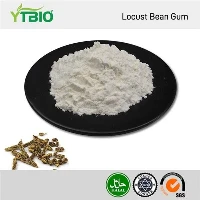
It's very important to choose the right thickening agent when making plant-based drinks, gluten-free baked goods, or protein shakes with clean labels. It comes from the seeds of the carob tree and is a natural protein. It gets rid of stickiness very well, even when used in small amounts. It stays together well with water molecules because its galactomannan structure is made up of mannose backbone units and galactose branches. This makes textures smooth without covering up tastes. That's how this hydrocolloid from Locust Bean Gum works: it makes hydrogen bonds in water-based processes. They are safer across a wide range of pH levels and processing temperatures because of this. They are also less likely to flow.
What Is Locust Bean Gum and Why Is It Used as a Thickener?
Locust Bean Gum is a pale powder from carob seeds, composed of a high-molecular-weight galactomannan (~300,000 Da). Built from galactose and mannose chains, it ties unequivocally with water to shape thick arrangements. Broadly utilized in nourishment, pharma, and beauty care products, it anticipates ice gems in solidified pastries, stabilizes refreshments, and moves forward gluten-free surfaces. Its impartial taste and plant beginning make it perfect for clean-label details looking for common thickening and stabilizing performance.
Clean-Label Appeal for Modern Consumers
People who are concerned approximately their wellbeing nowadays examined fixing records exceptionally carefully and see for chemicals that come from plants. In this case, Beetle Bean Gum thickeners work awesome. Vegetarians, individuals stressed approximately allergens, and individuals interested in entire nourishments will like this Mediterranean seed extricate since it feels more characteristic than man-made choices. When brands put "common thickeners" or "plant-based stabilizers" on their bundles, they're taking advantage of what individuals need. This is making the North American advertise develop exceptionally quickly.
Functional Benefits Beyond Thickening
The primary work of this galactomannan is still to make things stickier, but it moreover does other valuable things. It holds water well, which keeps the nourishment new longer by halting syneresis, the prepare by which fluids isolated from gels without needing to. Surface rise is most recognizable in low-fat nourishments, where it makes up for the need of delicateness. Individuals who make items moreover like that it blends well with other hydrocolloids. This implies that they as it were require to utilize a small gum to get the same effects.
How Locust Bean Gum Thickens: The Science Behind Its Functionality
Locust Bean Gum thickens through its galactomannan structure, with a straight mannose spine and arbitrarily branched galactose units. These branches anticipate tight atomic pressing, permitting water to be caught inside the polymer arrange. Full hydration requires warming over 85°C for at slightest ten minutes so chains can completely loosen up and tie water. Upon cooling, hydrogen bonds frame a three-dimensional arrange that immobilizes water, altogether expanding consistency and making steady, thick surfaces fundamental for nourishment and mechanical formulations.
Temperature-Dependent Hydration Characteristics
Temperature changes have a big effect on the water process. There is no damage to the structure of the polymer when the viscosity changes at 60°C, which is the best temperature for heating. Regular grades only partly dissolve in cold water below 80°C, but polished forms dissolve better in cold water. Viscosity drops for a short time when something is chilled, but it stays the same when something is frozen, which is a big reason to use frozen foods.
Synergistic Interactions with Other Hydrocolloids
One of the most interesting things about it is that it has similar hydrocolloids that gel with each other. This ingredient makes stretchy gels that are much stronger than either part by itself when it is added. If you add even a little Locust Bean Gum to carrageenan by itself, the glue changes into something strong that sticks to itself. Agar does the same thing, which makes the gel brighter and stronger when it breaks. People who make medicines can use 20–40% less hydrocolloid and still get better grain shapes because of these interactions.
Concentration and Viscosity Relationships
Viscosity goes up in a way that is linked to concentration and can be guessed. A 2% quantity gives the viscosity a value of about 46.4 MPa·s when tested in the usual way. Not like a Newtonian fluid, this one; its viscosity goes down when there is shear stress and then back up when the stirring stops. When even a small amount of force is put on the solution, it starts to work right away because the plastic displacement value is zero. In the making process, this makes it easy to pump and mix.
pH Stability Across Processing Conditions
But thickeners made from Locust Bean Gum stay steady in pH ranges from 3 to 11. Some hydrocolloids break down in acidic environments. When used in acidic ways, like salad dressings, fruit sauces, and sour dairy products, this wide tolerance is very important. While the pH changes, the thickness doesn't change much. This means that it works the same way whether you're making a neutral sauce or a hot dressing.
Comparison: Locust Bean Gum vs Other Common Thickeners
Read about the different ways each strengthening agent works so you can pick the right one. Many people use natural hydrocolloids like Locust Bean Gum to make food, but it has some pros and cons that are different from those of other choices.
Guar Gum: Rapid Hydration but Different Texture
Compared with Guar Gum, Locust Bean Gum hydrates more slowly but delivers smoother textures and less slimy mouthfeel. Guar gum dissolves rapidly in cold water, providing quick viscosity, but may feel sticky. Locust bean gum's lower galactose branching enhances intermolecular bonding, resulting in more refined textures. It achieves similar thickening at lower usage levels, making it preferable for premium formulations where subtle texture and clean sensory profiles are essential.
Xanthan Gum: Complementary Rather Than Competitive
Xanthan Gum complements rather than replaces Locust Bean Gum. Xanthan provides excellent suspension and flow properties, while locust bean gum enhances gel strength. Together, they create stable systems with improved freeze–thaw resistance and thermal stability. This synergy is widely used in sauces, dressings, and frozen foods. Formulators often combine both to achieve optimal viscosity, stability, and texture, rather than choosing one over the other.
Carrageenan: Enhanced Gelling Through Partnership
Carrageenan forms firm, brittle gels alone, but when combined with Locust Bean Gum, the result is elastic, cohesive structures with enhanced water retention. Adjusting ratios allows precise control over texture, from soft gels to firm products. This combination is widely applied in dairy desserts, confectionery, and processed meats. It enables manufacturers to tailor structural properties while maintaining stability and consumer-friendly textures.
Procurement Considerations for Locust Bean Gum in B2B Markets
If you want to find good Locust Bean Gum thickeners, you should look at the seller's skills, qualifications, and standards. When buying teams know these things, it's easy for them to find legal and expert sources they can trust.
Quality Specifications and Viscosity Grades
Commercial Locust Bean Gum is offered in multiple viscosity grades such as 800, 3000, and 6000 cps. Higher-viscosity grades provide stronger thickening at lower dosages, improving cost efficiency despite higher prices per kilogram. Clarified grades are available for beverage applications requiring transparency. Standardized viscosity testing helps buyers predict performance in formulations. Selecting the correct grade ensures optimal balance between texture, cost, and processing requirements in industrial applications.
Essential Certifications for Market Access
Suppliers of Locust Bean Gum should hold certifications like ISO9001, ISO22000, and FSSC22000 to ensure consistent quality and food safety. HALAL and KOSHER certifications expand global market reach, while FDA registration ensures compliance in the United States. Organic certifications further enhance appeal for clean-label products. Certificates of Analysis (COA) verify viscosity, purity, moisture, and microbiological safety. These credentials are critical for regulatory compliance and maintaining trust in B2B procurement.
Minimum Order Quantities and Packaging Options
Locust Bean Gum is typically available with flexible minimum order quantities, starting from small 1 kg samples to standard 25 kg industrial drums. Moisture-resistant foil packaging protects this hygroscopic powder from humidity, preserving quality during storage and transport. This flexibility supports both product development and large-scale manufacturing. Proper packaging ensures stability, prevents clumping, and maintains performance throughout the supply chain, enabling efficient handling and reliable usage.
Inventory Availability and Shipping Timelines
The supply chain must work well when making things for planned events. Many suppliers have a lot of goods on hand, so they can fill orders in one to three days. This keeps production delays to a minimum. Those with stores in other countries, like those in Rotterdam for European markets or in the US for transfer points, make it easier for people in North America to get their goods and get through customs more quickly. Making sure there are no problems with shipping, wait times, or papers keeps production going, which costs a lot of money.
Practical Tips on Using Locust Bean Gum in Food Products
You need to handle and mix thickeners made from Locust Bean Gum the right way for them to work at their best. These tips will help people who make products do their best in many scenarios.
Proper Hydration Techniques
Heavy grades need to be boiled to 85°C and kept there for ten minutes in order to fully hydrate. If the process of melting isn't finished, it leaves behind bits that make it look grainy and lower its thickness. Refined grades can help with dispersibility in cold water, but heat is still the best way to get the job done. Slowly stir the powder into the water while it swirls, or mix it with other dry ingredients before adding the liquids. This blend is stickiest when it cools to room temperature, so being patient while working it will lead to better results.
Dosage Recommendations by Application
Typical usage levels of Locust Bean Gum vary by application: 0.1–0.5% in ice cream, 0.3–1.0% in gluten-free baking, 0.2–0.8% in soups, and 0.05–0.2% in beverages. Dairy products use 0.1–0.3% for texture enhancement. In plant-based proteins, it improves suspension and creaminess, while 0.5–1.5% in nutrition bars helps retain moisture and chewiness. Accurate dosing ensures desired viscosity without compromising taste or mouthfeel.
Synergistic Formulation Strategies
Putting together a glue made of hydrocolloids that work well with Locust Bean Gum makes it work better than either of them could do on their own. When you mix kappa-carrageenan with water one-to-one, you get gels that are hard but stretchy. These gels work well in dairy treats and candy. Fruit sauces and jams mixed with agar in amounts of 2:1 or 3:1 make the gel crisper and stronger when it breaks. Xanthan gum works well on its own, but adding 20–30% Locust Bean Gum makes it more solid and better able to handle freeze-thaw cycles when it is used frozen.
Safety Profile and Regulatory Status
This natural carbohydrate is usually thought to be safe (GRAS) in the United States. It can be bought in European markets as E410. Even though it doesn't happen often, carob is in the same family as beans, so people who are allergic to beans should be careful with it. Food fibre, which can't be broken down, mostly stays the same as it moves through the digestive system. This is one reason why it's called dietary fibre. It's important for people who make products to remember that even though most people can safely eat baby foods, they need to be made with care so that the nutrients are taken properly.
Conclusion
Thickening ingredients made from Locust Bean Gum are very helpful for businesses that want to make plant-based, clean-label foods in many different types. Their unique galactomannan structure lets you consistently control how sticky they are, how well they gel together, and how stable they are across a wide pH range. This makes it easier to solve formulation issues. This juice from Mediterranean seeds can be used to make vegan ice cream, gluten-free baked goods, and fancy sauces, among other things. Also, it can be used in sports drinks and meet the needs of people who want pure ingredients. You should only work with qualified providers who offer a range of viscosity grades, clear paperwork, and quick expert help if you want to make the best products.
FAQ
1. What differentiates carob gum from guar gum in formulation performance?
These two galactomannans are different at the molecular level, so they work in different ways. There are fewer galactose branches along the mannose backbone in thickeners made from Locust Bean Gum. The thickness goes down and the surfaces get better at the same time. Guar breaks down quickly in cold water, but most types of Locust Bean Gum need to be boiled above 85°C to fully dissolve. The difference in texture is important. Guar has a smooth, slippery feel, while Locust Bean Gum is bland and fluffy, which works well in bread and dairy products.
2. Can this ingredient function effectively in gluten-free baking?
Of course. There are some products that are gluten-free that can't copy wheat's viscoelastic network. This means that gluten-free baked goods often come out crumbly and dry. Adding a Locust Bean Gum thickener to the dough helps it stick together, stay moist, and have a good crumb structure. It keeps the water in the food that would normally evaporate while baking, so the food stays fresh longer. These two things work together to make the texture even better when you mix them. This makes gluten-free cakes and breads that are just as soft and fluffy as those made with wheat.
3. How should procurement teams initiate sample orders for formulation testing?
Talk to qualified companies directly and be clear about the application and the features you want it to have. Samples as small as 1 kg can be sent by most reputable makers in aluminum foil bags so that they can be tested fully in a lab before being made on a large scale. For help with testing methods, get analysis papers, specification sheets, and tips on how to use the product. During the development process, make sure that it is easy to understand how to choose the viscosity grade, how long it will take to ship, and how to get expert help.
Partner with YTBlO for Premium Locust Bean Gum Supply
YTBlO supplies high-quality Locust Bean Gum produced under strict modern food standards, ensuring reliability and consistency. Available in viscosity grades of 800, 3000, and 6000, all batches undergo rigorous testing and include full documentation such as FSSC22000, HALAL, KOSHER, ISO9001, ISO22000, and FDA certifications. With stock in Rotterdam and the US, orders as small as 1 kg ship within 1–3 days. Their technical team supports formulation development, optimising dosage, synergistic blends, and texture performance for plant-based, gluten-free, and clean-label products. Comprehensive traceability, Certificates of Analysis, and strict quality controls ensure dependable sourcing, helping manufacturers maintain consistent production across diverse applications. Reach our procurement specialists at sales@sxytbio.com to discuss your specific application needs. Request samples, obtain detailed technical specifications, or explore custom packaging solutions tailored to your manufacturing processes. Experience the difference that comes from partnering with a Locust Bean Gum source that cares about good products and happy customers.
References
1. BeMiller, J.N. & Whistler, R.L. (2009). Industrial Gums: Polysaccharides and Their Derivatives (Third Edition). Academic Press, San Diego.
2. Dea, I.C.M. & Morrison, A. (1975). Chemistry and interactions of seed galactomannans. Advances in Carbohydrate Chemistry and Biochemistry, 31, 241-312.
3. Sittikijyothin, W., Torres, D. & Gonçalves, M.P. (2005). Modelling the rheological behaviour of galactomannan aqueous solutions. Carbohydrate Polymers, 59(3), 339-350.
4. Barak, S. & Mudgil, D. (2014). Locust bean gum: Processing, properties and food applications-A review. International Journal of Biological Macromolecules, 66, 74-80.
5. Wielinga, W.C. (2009). Galactomannans. In G.O. Phillips & P.A. Williams (Eds.), Handbook of Hydrocolloids (Second Edition, pp. 228-251). Woodhead Publishing, Cambridge.
6. Pollard, M.A., Fischer, P., Windhab, E.J., Eder, B. & Amadò, R. (2011). Characterization of galactomannans isolated from legume endosperms of Caesalpinioideae and Faboideae subfamilies by multidetection aqueous SEC. Carbohydrate Polymers, 79(1), 70-84.