


YTBIO: Your Professional Tablet OEM/ODM Supplier!
Shaanxi Yuantai Biotechnology Co., Ltd. (YTBIO) is a professional manufacturer and supplier of health food raw materials, finished products and functional cosmetic raw materials. Our company was established in 2014. Our main products include herbal extracts, magnesium threonate and creatine monohydrate, etc., and provide OEM/ODM services for capsules, tablets and solid beverages. Currently, we have branches and transit warehouses in Europe (Netherlands, Rotterdam), the United States and other places to provide more convenient services to local customers.
Multiple Partners
Our company has many partners in Europe, America, and Southeast Asian countries, and cooperates with brands of various sizes, including Sponge Spicule, Retinal, Glutathione, Arbutin, etc.
Well Equipped
We have established advanced production facilities of over 4,000 square meters and a complete in-house laboratory, which can provide specially designed formulas and arrange flexible production plans.
Quality Assurance
Our products are produced strictly in accordance with the highest quality requirements and have obtained HACCP, ISO9001, ISO22000, HALAL, KOSHER, FDA, EU&NOP certification and NMPA registration certificates for various cosmetic ingredients.
Customized Services
We can provide customized services at every stage from product formulation to product packaging, including the production, purification, packaging and other aspects of the product's raw materials, and provide OEM/ODM orders.
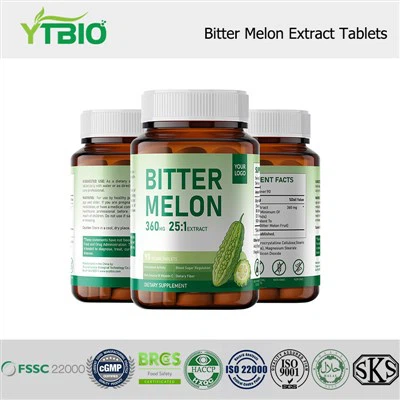
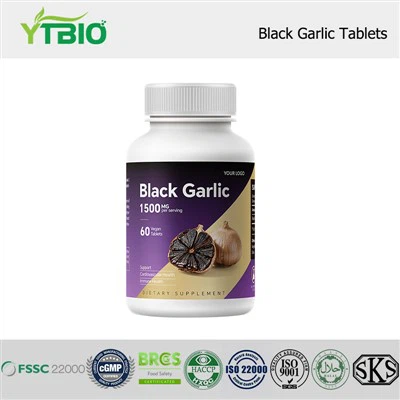
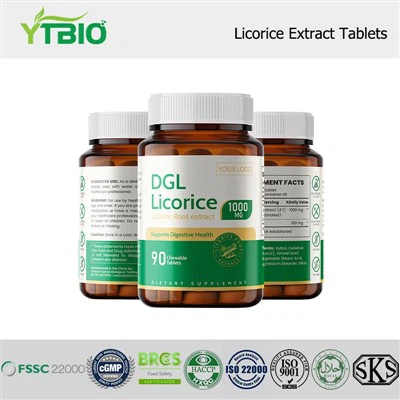
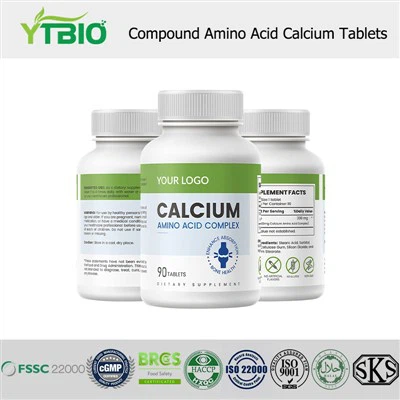
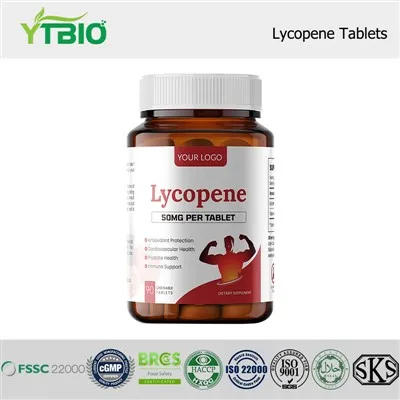
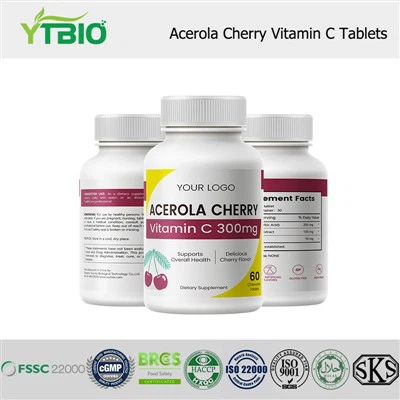
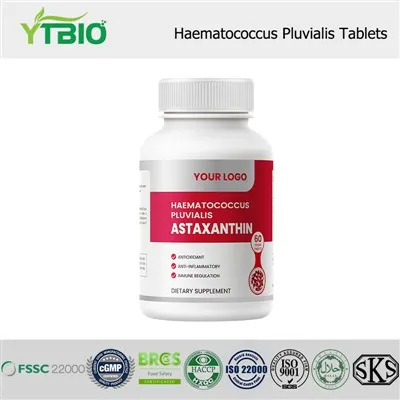
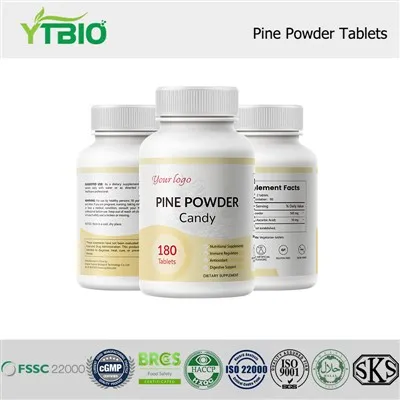
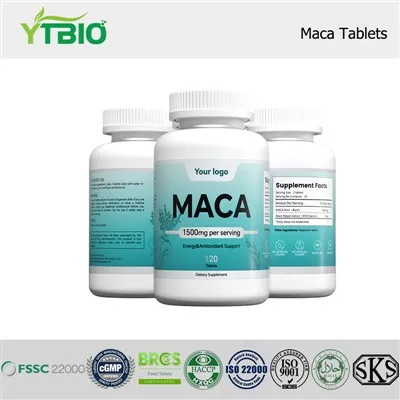

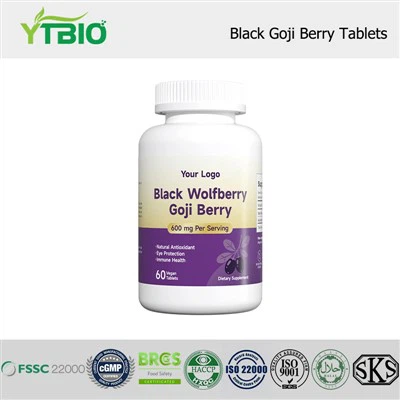



A tablet (also known as a pill) is a pharmaceutical oral dosage form (oral solid dosage, or OSD) or solid unit dosage form. It comprises a mixture of active substances and excipients, usually in powder form, that are pressed or compacted into a solid dose. Tablets are prepared either by moulding or by compression. The excipients can include diluents, binders or granulating agents, glidants (flow aids) and lubricants to ensure efficient tabletting; disintegrants to promote tablet break-up in the digestive tract; sweeteners or flavours to enhance taste; and pigments to make the tablets visually attractive or aid in visual identification of an unknown tablet.

Smooth Surface
Our tablets have beautiful product markings and no surface defects such as chips, cracks, discoloration, or contamination, making them easy to package and store.
Shock Proof
These tablets are made through a compression process in which the powder form is compressed or compacted into a solid dose that is strong enough to withstand impacts during manufacturing, packaging, transportation and distribution.
Flexible Looks
They can come in a variety of shapes, including round, rectangular (caplets), and are available in different colors to differentiate drug properties. Some tablets have lines on them to make splitting easier.
Easy to Store
These tablets are generally more stable than capsules, have a longer shelf life, and are resistant to environmental factors such as humidity and temperature, making them easy to store in various locations.
Tablet Pros
● Inexpensive. Although it depends on the active ingredient and the casing, tablets are generally cheaper to manufacture than capsules. This often makes them more affordable for consumers.
● Durable and Long-Lasting. Tablets are more stable and typically have a longer shelf life than capsules.
● Higher Dosages. A single tablet can accommodate a higher dose of an active ingredient than a single capsule.
● Can be Split. Unlike capsules, tablets can be cut in two for a smaller dose, if needed.
● Chewable. Some tablets are available in chewable or even orally-dissolving tablet forms.
● Variable Delivery. Tablets can come in quick release, delayed release, or extended release formats.
Tablet Cons
● More Likely to Cause Irritation. Tablets are more likely to irritate the gastrointestinal tract.
● Slower Acting. Once in the body, tablets are absorbed more slowly than capsules. They may take longer to work.
● Uneven Disintegration. Tablets are more likely to break down inconsistently, which can decrease the medication’s effectiveness and overall absorption.
● Less Palatable. While many tablets have a flavored coating to mask the taste of the medication, some do not. Once swallowed, they can leave a bad aftertaste.
Pills
A pill was originally defined as a small, round, solid pharmaceutical oral dosage form of medication. The word's etymology reflects the historical concepts of grinding the ingredients with a mortar and pestle and rolling the resultant paste or dough into lumps to be dried. Today, in its strict sense, the word pill still refers specifically to tablets (including caplets) rather than capsules (which were invented much later), but because a simple hypernym is needed to intuitively cover all such oral dosage forms, the broad sense of the word pill is also widely used and includes both tablets and capsules — colloquially, any solid oral form of medication falls into the "pill" category.
An early example of a pill comes from ancient Rome. They were made of zinc carbonates, hydrozincite and smithsonite. The pills were used for sore eyes and were found aboard a Roman ship that wrecked in 140 BC. However, these tablets were meant to be pressed on the eyes, not swallowed.
Caplets
Variations on a common tablet design, which can be distinguished by both colour and shape. A caplet is a smooth, coated, oval-shaped medicinal tablet in the general shape of a capsule. Many caplets have an indentation running down the middle, so they may be split in half more easily. Consumers have viewed capsules as the most effective way to take medication ever since they first appeared. For this reason, producers of drugs such as OTC analgesics wanting to emphasize the strength of their product developed the "caplet", a portmanteau of capsule-shaped tablet, in order to tie this positive association to more efficiently produced tablet pills as well as being an easier-to-swallow shape than the usual disk-shaped tablet.
Orally Disintegrating Tablets (ODT)
An orally disintegrating tablet or orodispersible tablet (ODT), is a drug dosage form available for a limited range of over-the-counter (OTC) and prescription medications.

Dry Granulation
Roller compaction (also referred to as roll compaction) is a common dry granulation technology which is especially well-suited for heat- and moisture-sensitive actives. Dry granulation (DG) incorporates mechanical compression either by slugging or roller compaction while wet granulation (WG) uses a liquid and typically a binder to facilitate agglomeration of the powder particles.
Forming granules without liquid using the DG technique requires compacting the mix followed by size reduction of the compacts to the desired particle size. DG can be used to improve flow properties and prevent segregation of components in cases where DC processes reach their limits, and to avoid API degradation induced by WG. Because it does not use moisture, DG is especially well-suited for APIs that are sensitive to solvents or moisture. Compared to wet granulation, DG is a shorter, more cost-effective manufacturing process.
DG can be performed in two ways – slugging or roller compaction. With slugging, tableting presses are used to form large tablets (slugs) which are then broken by a hammer mill to form granules. In roller compaction, the raw material is compressed into plates or sheets between two rotating rollers, which are then milled into granules. Compared to slugging, roller compaction is very gentle, making it the preferred approach with heat- and moisture-sensitive materials.
Another benefit of using a roller compactor is that the auger-feed system delivers the powder materials consistently between the two rollers. In contrast, poor flow properties of the material may result in various degrees of densification of the compacts produced using table press compaction.
Wet Granulation
In WG, a liquid and typically a binder is used to granulate the powder and the process requires blending, wetting, wet mass stage, drying, and sizing. The binder is typically a polymer such as polyvinyl alcohol (PVA), polyvinylpyrrolidone (PVP), copovidone, starch or cellulose derivatives dissolved in either an aqueous or organic solvent.
While aqueous solutions are eco-friendly and relatively less expensive than organic solvents, they can have a longer drying time. Examples of organic solvents used in WG are ethanol and propanol.
Several approaches to WG are available:
● High-Shear processes use equipment that mixes the powder and liquid using high shear forces, accelerating the manufacturing process.
● Twin-Screw granulation continuously manufactures wet granulate powders at lower liquid concentrations and with improved product consistency.
● Fluid bed granulation is a multiple-Step WG process in which the powders are pre-heated, granulated, and dried in the same vessel. This technique allows close control of the granulation process.
As noted above, among the most widely used binders are PVA, PVP, copovidone, starch, and cellulose derivatives; commonly used fillers in oral dosage forms include lactose, microcrystalline cellulose (MCC), calcium phosphates, and mannitol.
Continuous Manufacturing
All of these tableting technologies can be either applied in traditional, stepwise, batch manufacturing or as part of a continuous manufacturing process. It is important that the individual components show good flowability to support feed and throughput which.
Overall, continuous manufacturing offers several advantages compared to batch manufacturing including:
● Improved efficiency with a single, end-to-end process operating in one location
● Elimination of the need for scale-up to larger equipment
● Reduced risk of human error with the use of in-process controls
● Reduced manual handling and less time needed for equipment cleaning
How to Give Tablets or Capsules?
Tablets or Capsules that Need to be Swallowed Whole
(1)Wash your hands.
(2)Remove the required number of tablets or capsules from the packaging and put in a plastic cup.
(3)Put one on tongue towards the back of mouth.
(4)Give your a drink from a cup without a spout or nozzle.
(5)The tablet or capsule should be swallowed along with the drink. It might help to look down while swallowing.
(6)Repeat with the rest of the dose if necessary.
Tablets or Capsules that Can Be Crushed or Emptied
(1)Wash your hands.
(2)Remove the required number of tablets or capsules from the packaging and put in a plastic cup.
(3)For tablets – Put the tablet in the tablet crusher and empty the crushed tablet back into the plastic cup.
(4)For capsules – Hold the capsule over the plastic cup and gently pull the two halves apart so the contents fall into the plastic cup.
(5)Mix the crushed tablet or capsule contents with a small amount of water as instructed on the label, making sure they are well mixed.
(6)Draw up the mixture in an oral syringe and give to as instructed on the label.
(7)Give a drink to wash down the medicine.
Note: Instead of mixing with water, you can also mix the crushed tablet or capsule contents with a teaspoon of yoghurt.
Giving a Proportion of a Tablet That Can be Dispersed
(1)Measure a specific volume of water, for example 10ml or as instructed on the label.
(2)Disperse the tablet(s) in the water – do not stir or shake the mixture.
(3)Draw up the required proportion using an oral syringe following the instructions on the label.
(4)Give the required dose.
Note: Use a new tablet or capsule each time unless otherwise directed.
Storing the Tablets or Capsules Safely
(1)Keep all medicines out of the reach and sight of children.
(2)Keep the tablets or capsules in their original packaging in a cool, dark place according to the instructions on the label.
(3)Read the instructions on the label and only use the tablets or capsules.
(4)Always check the expiry date of the medicine.
Dosage Form Selection
Selecting a suitable dosage form based on the characteristics of raw materials, consumer habits, and the convenience of delivery is very important for the tablet dosage form. Here are a few different types of commonly seen dosage forms of tablet manufacturing——glass-bottle drinks, glass-bottle carbonated drinks, back side seal powder sachets, powder pouch, easy-to-carry liquid sachet, 25ml PET liquid concentrated drink, tablets, capsules, functional jelly, etc. The product designer will integrate your needs and propose a tablet development proposal that matches your brand values and carry out tablet ODM product development.
Formula Manufacturing
Tablet formulation manufacturing is a science. The first requirement is safety. Even if the raw material is very popular, it will not be added as long as there is any doubt. tablet formulation manufacture is not as simple as A+B+C. We must consider whether the raw materials will have cross-reactions and Maillard reactions. For example, phenols and proteins will produce precipitation. The poor water solubility of raw materials causes precipitation, powder formulations tend to absorb moisture and caking or discoloration. To avoid these problems, everything must be designed by professionals. In addition, we must pay attention to the scientific nature of tablet formulation manufacture. The correct estimation of the number of effective ingredients added is to ensure the effectiveness of the product during the validity period.
Providing Samples
Tablet manufacturer researchers will provide samples during this stage. Sampling after formulation confirmation is an important step before mass production. This stage confirms that the product is correctly standardized, has the same quality before mass production for production evaluation, and turns various ideas into reality. The powder particle size of powder sachets and density will affect filling and sealing. Taste is an important aspect of the customer experience as well. Drink tablet ODM product mixes various flavours in different ratios to propose a flavour that is acceptable for the target customer of the private label tablets.
Quality Assurance
We provide production records and implements layers of inspection on raw materials and finished goods. Our professional legal team provides global regulatory consultation, import, and export planning, intellectual property protection, and patent placement, allowing customers to focus more on marketing without worrying about rapid market expansion and sales in new regions.
Stability Testing
The test items selected should be based on the ingredients, product characteristics, quality requirements, and items that are susceptible to change during the storage period of the product and may have an impact on its quality, safety, or efficacy. If the health effects of the ingredients (or quality control indicators) of the product have been identified, this should be used as the test item.
After-Sales Support
The only way to achieve a win-win situation is for consumers to benefit and tablet companies to profit. tablet ODMs not only manufacture the products for the brands, but also give multiple added value services to accelerate product promotion through product planning, marketing, and professional lecturer support.
Certificate Photo


Factory Photos

Frequently Asked Questions of Tablet OEM/ODM
Q: What is a medicine tablet?
Q: What is the medicine tablet used for?
Q: How do medicine tablets work?
Q: What are common tablets?
Lisinopril (Zestril)
Levothyroxine (Synthroid)
Atorvastatin (Lipitor)
Metformin (Glucophage)
Simvastatin (Zocor)
Omeprazole (Prilosec)
Amlodipine (Norvasc)
Metoprolol (Lopressor)
Q: What are the types of tablet?
Lmmediate-Release Tablets.
Extended-Release Tablets.
Chewable Tablets.
Sublingual and Buccal Tablets.
Effervescent Tablets.
Q: What is the difference between a tablet and a pill?
Q: How do you take medicine tablets?
Q: How long does it take for a tablet to work?
Q: Is a tablet a drug?
Q: What is oral tablet?
Q: What are the advantages of tablets medicine?
Q: What is the easiest way to take a tablet?
Take pills with water – you can take some pills with other drinks or food. Always read the instruction leaflet.
Lean forward slightly when you swallow.
Practise swallowing with small sweets or bits of bread – try bigger pieces as swallowing gets easier.
Q: Where do tablets go when you swallow them?
Q: Why choose a tablet over a capsule?
Q: How do you swallow a tablet if you can t?
Q: Can you eat tablets instead of swallowing?
Q: Do tablets get stuck in your throat?
Q: Do tablets work on an empty stomach?
Q: What happens if a tablet goes down the wrong way?
Q: Why do I have a fear of swallowing tablets?
Shaanxi Yuantai Biological Technology Co., Ltd. is one of the most professional tablet oem/odm manufacturers and suppliers in China, specialized in providing natural plant extracts with competitive price. We warmly welcome you to buy or wholesale bulk tablet oem/odm for sale here from our factory.
