
What the Oleanolic acid is
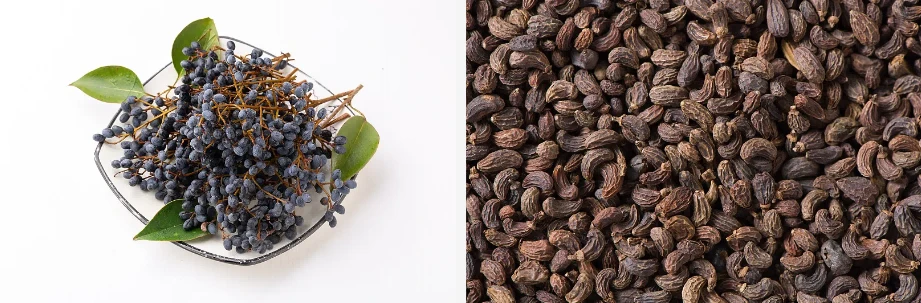
Oleanolic acid is a pentacyclic triterpenoid compound isolated and extracted from the whole plant of the Gentianaceae plant Swertia or the fruit of Ligustrum lucidum. It exists in many species as free bodies and glycosides. Planting. Oleanolic acid is widely found in plants, with a general content of 0.2% to 2%. The content of the Cucurbitaceae plant Luoguodi is 1.5% to 2%, and the content of Ligustrum lucidum fruit is 0.6% to 0.7%. Oleanolic acid is white needle-like crystal (ethanol), odorless and tasteless. Unstable to acids and alkalis. Melting point 308~310℃, insoluble in water, soluble in methanol, ethanol, ether, acetone and chloroform.
The Function of Oleanolic acid
1. Reduce liver damage: Oleanolic acid is a pentacyclic triterpenoid compound, which has obvious protective effect on acute and chronic liver damage in rats caused by carbon tetrachloride. After treatment, enlarged mitochondria and expanded rough endoplasmic reticulum were restored. It can also significantly reduce the hepatocellular ballooning degeneration, necrosis and inflammatory response of acute and chronic liver injury. The accumulation of triglycerides in the liver decreases and the amount of glycogen increases.
2. Reduce serum alanine aminotransferase activity: oleanolic acid has obvious enzyme-lowering effect on animals with acute and chronic hepatitis and liver cirrhosis.
3. The reduction of serum r-globulin is consistent with the reduction of liver-related inflammatory reactions seen in histological observations.
4. Promote the regeneration of liver cells: Oleanolic acid can significantly increase the number of mitotic phases in the residual liver of rats, and the degree of regeneration is higher than that of the control group, suggesting that it has the effect of promoting cell regeneration.
5. Reduce the tyrosine level in the brain homogenate of rats with cirrhosis: Since the tyrosine level in the brain homogenate is significantly reduced, it can inhibit the production of pseudo neurotransmitters, so it is beneficial to the prevention and treatment of hepatic encephalopathy.
6. Inhibit liver fibroplasia: In rats with liver fibrosis treated with oleanolic acid, liver fibroplasia was severe and significantly reduced, and liver collagen content was reduced, suggesting that it has the effect of preventing and treating liver cirrhosis.
7. Oleanolic acid has a significant inhibitory effect on the mononuclear phagocyte system, macrophage phagocytosis and experimental arthritis in mice, but has an impact on heterosexual humoral immune function and antigen-binding cells. Enhance immunity and inhibit the growth of S180 tumor strain.
8. It has a protective effect on chromosome damage, a preventive effect on experimental atherosclerosis, and can also correct protein metabolism disorders.
Oleanolic acid production method
1 Alcohol extraction method
Cut 100g of wood root bark into small pieces or filaments, add 500ml of 70% ethanol and reflux for extraction three times, each time for about 3 hours, and combine the alcohol extracts; then distill and recover most of the ethanol, then add sulfuric acid to make the concentration 15%, and reflux 2h, let cool and then filter. Wash the filter cake with water three times, boil it twice with 3% NaOH solution, boil it once with water, and filter after each boiling to obtain crude off-white sodium salt. Add about 8 times the amount of more than 85% ethanol and 0.5% activated carbon to the crude product, reflux for 40 minutes, filter, adjust the filtrate to pH=3~4 with HCl, leave it overnight, filter, wash the filter cake with distilled water until there is no chloride ion, and dry it. Premium oleanolic acid.
2 Water extraction method
Take the wood root bark and crush it, decoct it with water for 3 times, about 1 hour each time, combine the decoction, and concentrate it into a thin paste. Then add concentrated sulfuric acid and keep stirring to make the concentration reach 20%, heat for about 1h, let cool, add water to dilute, filter, wash the filter cake with water, boil twice with 3% NaOH solution, boil once with water, and filter after each boiling , to obtain crude sodium salt. Add about 8 times the amount of more than 85% ethanol and 0.5% activated carbon to the crude product, reflux for 40 minutes, filter, and then adjust the filtrate to pH=3~4 with HCl, let it stand overnight, filter, wash the filter cake with distilled water until there is no chloride ion, and dry it. Get this product.
Identification of oleanolic acid
(1) Take about 50 mg of this product, add 2 ml of chloroform to dissolve, add 2 drops of sulfuric acid, shake, and stand still. The chloroform solution gradually changes from colorless (or light yellow) to light red.
(2) Take a small amount of this product, add 1ml of acetic anhydride, heat slightly to dissolve, add 1 drop of sulfuric acid, and it will appear purple, and the color will gradually become darker after standing.
(3) Take a small amount of this product, add 0.2ml of vanillin's glacial acetic acid solution (0.5g of vanillin, dissolve it in 10ml of glacial acetic acid), add 0.8ml of perchloric acid, and heat it in a boiling water bath for a few minutes to turn purple. Red, add 2ml of ethyl acetate, purple red dissolved in ethyl acetate, standing does not change color.
(4) The main absorption peaks shown in the infrared absorption spectrum of this product should be consistent with those of the reference product.
Summarize
Oleanolic acid is widely found in a variety of plants with low toxicity and has a variety of biological activities, such as liver protection, detoxification, hypoglycemic, lipid-lowering, anti-tumor, anti-hypertensive, anti-inflammatory, anti-viral The pharmacological effects have been gradually studied in depth. Oleanolic acid contains characteristic functional groups such as carboxyl, hydroxyl and double bonds in its molecular structure. Therefore, its structural modification and chemical transformation are mainly carried out in these three parts, and it is also carried out for the inherent rings in the molecule. A ring-opened compound with a novel structure was obtained. In various activity evaluation experiments of oleanolic acid and its derivatives, some derivatives showed higher pharmacological activity than the parent, which indicated that oleanolic acid as the lead compound has the potential for further structural optimization.
If you would like to learn more, please contact sales@sxytbio.com,Click here to contact us online