Description:
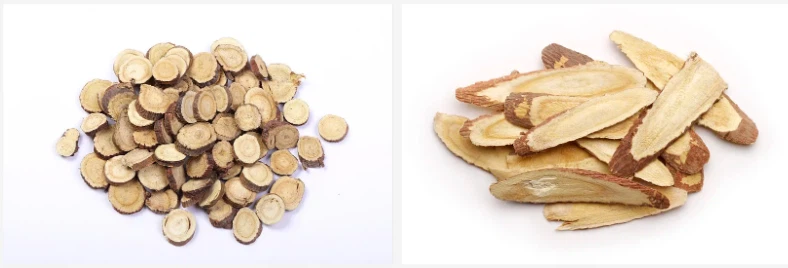
Licorice is a common food for both medicine and food. Licorice extract is widely used as a natural sweetener in sweets and canned foods. Licorice gets its sweet taste from glycyrrhizic acid and glycyrrhetinic acid. The former is a class of triterpenoid saponins, accounting for about 4% to 5% of the dry weight of licorice root, and the sweetness is 50 times that of sucrose. Glycyrrhetinic acid is formed by glycyrrhizic acid water to remove the sugar acid chain, and the sweetness is 250 times that of sucrose. Glycyrrhetinic acid is cytotoxic, and long-term consumption of glycyrrhiza (100g/d) can lead to severe hypertension and cardiac hypertrophy, clinical symptoms are sodium ion retention and potassium ion expulsion, and severe cases can lead to extreme weakness and ventricular fibrillation.
Pharmacologic Action:
Adrenocorticoid-like effect
Salocorticoid-like effect
Glycyrrhetinic acid can promote sodium retention, water retention and potassium excretion in healthy people and animals, showing a deoxycorticosterone-like effect. When 40mg of hydrocortisone daily intramuscular maintenance therapy was used in patients with bilateral adrenal resection, a synergistic effect and electrolyte balance were achieved by adding glycyrrhetinic acid to 4g daily subcutaneous injection. However, if hydrocortisone is stopped and only glycyrrhetinic acid is given, the loss of sodium storage capacity occurs, and Addison's crisis occurs.
Glucocorticoid-like effects
The chemical structure of glycyrrhetinic acid is similar to that of corticosteroids. Glycyrrhetinic acid can still produce sodium retention and antidiuretic and anti-inflammatory effects on animals with adrenal cortexectomy and pituitary glandectomy. Glycyrrhetinic acid 25 mg has a stronger effect on water and sodium retention in rats than deoxycorticosterone 1 mg. Therefore, it is believed that the deoxycorticosterone-like effect of glycyrrhetinic acid is not produced by endogenous deoxycorticosterone and aldosterone, and may be a direct effect. Some people also think that it is an indirect effect, that is, glycyrrhetinic acid inhibits the destruction of adrenal corticosteroids in the body, so the content of corticosteroids in the blood increases correspondingly, and presents a more obvious adrenal cortex hormone-like effect. Another report pointed out that glycyrrhetinic acid will only have an effect on the adrenal cortex function weakened but not completely exhausted.
Anti-inflammatory and anti-immune effects
Glycyrrhetinic acid has anti-inflammatory effects like phenylbutazone or hydrocortisone. Glycyrrhetinic acid has an inhibitory effect on cotton ball granuloma, formaldehyde-induced foot swelling, and subcutaneous granulomatous inflammation in rats, and its anti-inflammatory potency is about 1/10 of that of cortisone or hydrocortisone. Glycyrrhetinic acid has inhibitory effects on rat experimental arthritis induced by carrageenan, and has different degrees of inhibitory effects on allergic reactions in guinea pigs induced by horse serum or egg white. Its anti-inflammatory and anti-allergic reactions may be related to inhibition of capillary permeability, anti-histamine or reduction of cell reactivity to stimuli.
Glycyrrhetinic acid has inhibitory effects on a variety of acute inflammations, and its anti-inflammatory effects are not dependent on the pituitary-adrenal cortex system, but are related to the inhibition of PgE2 production in inflammatory tissues, and the antagonism of inflammatory mediators such as histamine and serotonin. Sodium glycyrrhetinate can inhibit the generation of malondialdehyde, a degradation product of Pg endoperoxide, in the inflammatory foot of mice with protein-induced inflammation, and this effect can be antagonized by exogenous arachidonic acid. Sodium glycyrrhetinate also enhances the non-specific cellular immune function of the body. 18-β glycyrrhetinic acid has immunomodulatory effect on acute serum sickness in rabbits. Fifty rabbits were randomly divided into experimental group and control group, and bovine serum albumin (BSA) was used as antigen to create rabbit transient acute serum sickness model. 18-β glycyrrhetinic acid was dissolved in olive oil (150mg/ml), and the animals in the experimental group were intramuscularly injected with 18-β glycyrrhetinic acid 200 mg/kg on the 3rd, 5th, 7th, and 9th day after BSA injection. The control group was intramuscularly injected with olive oil. Results The anti-BSA-1gg antibody in the serum of animals in the control group and the experimental group was detected on the 6th day after BSA immunization, and reached the highest level on the 12th day, and the experimental group was significantly higher than the control group. The specific BSA-anti-BSA complex in the circulation of the two groups of animals was increased compared with that before immunization, and there was a significant difference, but there was no statistical difference between the two groups. The complement value in the blood was significantly higher in the experimental group than in the control group. 18-βglycyrrhetinic acid had no effect on the formation of CIC.
Effects on the digestive system
Glycyrrhetinic acid can reduce blood bilirubin and increase urinary bilirubin excretion in rabbits and rats with ligated common bile duct, which is stronger than glucuronolactone or methionine. It has good anti-ulcer effect on rats with pylorus ligation. Its therapeutic index is high.
Antitussive and expectorant effect
The choline salt of glycyrrhetinic acid has obvious antitussive effect on the cough caused by chemical stimulation (inhalation of ammonia water) and electrical stimulation of cat laryngeal nerve. Therefore, it is believed that its antitussive effect is related to the central nervous system.
Antidiuretic effect
Glycyrrhetinic acid and its salts have obvious antidiuretic effect. It can enhance the reabsorption of sodium and chloride by the renal tubules and present an antidiuretic effect; its mode of action is different from that of deoxycorticosterone, which may be its direct effect on the renal tubules.
Effects on auditory function of the inner ear
Studies using auditory electrophysiology methods have shown that after intramuscular injection of 100 mg/kg glycyrrhetinic acid to guinea pigs, the action potential response threshold of guinea pig auditory nerves decreases, indicating that glycyrrhetinic acid can improve the auditory function of the inner ear of guinea pigs.
Scavenging effect on oxygen free radicals
18-β glycyrrhetinic acid 0.3mmol/L has obvious scavenging effect on oxygen free radicals released by human polymorphonuclear leukocytes (PMN), but has no effect on the oxygen consumption of PMN. 18-βglycyrrhetinic acid has obvious scavenging effect on O-2 and -OH produced in the aqueous system. 30mol/L has a significant inhibitory effect on the chemiluminescence produced by PMN. The results confirmed that 18-βglycyrrhetinic acid has the function of directly capturing oxygen free radicals.