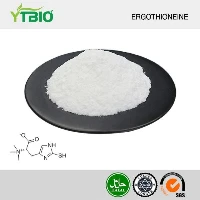

If you've ever wandered down the aisles of a health-focused skincare store, or scanned the ingredients list of a modern supplement, chances are you've spotted ergothioneine (ERGO) popping up more and more. As a supplier of high-quality ergothioneine powder, I get this question every single day: How long does it take for ergothioneine powder to work? The answer isn't one-size-fits-all-it depends on how you're using it, your unique biology, and what you're hoping to achieve. Let's break this down, based on science, real-world use cases, and the nuances of delivering this powerful amino acid to your body.
First, let's ground ourselves in what ergothioneine actually does. Unlike many antioxidants that play a general scavenger role, ERGO has a special superpower: your body has a specific transporter protein called OCTN1 that only pulls ERGO from your bloodstream into cells. That means it concentrates exactly where it's needed most-cells under oxidative stress, like your skin's fibroblasts (which make collagen), retinal cells, liver cells, and even immune cells. No other antioxidant does that, which is why it's such a game-changer for targeted support. But because it works this way, its timeline for effects is tied to how quickly your cells can absorb and use it, not just how much you ingest.
Let's start with the most common use case for ERGO: skincare. Right now, ERGO is a star in topical formulations designed to fight sun damage, reduce fine lines, and soothe irritated skin. If you're applying an ERGO-infused serum or cream, how long until you see results? Most people report mild, temporary improvements within 2 to 4 weeks. That makes sense when you consider skin cell turnover: the average human skin cell renews every 28 days, so it takes roughly that long for new cells to surface with ERGO's protective effects. For example, if you're using ERGO to help calm post-acne redness or reduce the appearance of fine lines from daily environmental stress (think pollution and UV rays), you'll likely notice your skin looks plumper and less dull around the 3-week mark.
But wait-this timeline can shift depending on what other ingredients you pair ERGO with. Skincare is all about synergy, and ERGO plays nicely with a range of raw materials many formulators swear by. Take Lactobionic Acid, for instance: a gentle polyhydroxy acid (PHA) that exfoliates dead skin cells without irritating the barrier. If you pair ERGO with Lactobionic Acid, the PHA helps clear away the top layer of dull, damaged skin so ERGO can penetrate deeper to support the cells below. That combination can actually speed up results by a few days, since the ERGO isn't stuck on the surface of your skin-it's working where it matters. Another ingredient that pairs well? Zinc Pyrithione Powder, which helps balance oil production and soothe inflamed skin. If you're using ERGO to address acne-prone skin, adding Zinc Pyrithione Powder can reduce redness faster, so you'll see ERGO's protective effects alongside those calming benefits in about 2 weeks.
For internal use-say, taking ergothioneine powder as a dietary supplement- the timeline looks a little different. Since you're ingesting it, it travels through your digestive tract first, so absorption is the first hurdle. Studies show that about 60-70% of orally consumed ERGO is absorbed by the body, and once in the bloodstream, it binds to albumin (a protein that carries nutrients) before being distributed to cells. That means you'll start to see changes in bodily functions tied to oxidative stress after 4 to 8 weeks of consistent daily use. For example, many users report better energy levels or reduced joint discomfort from exercise-induced oxidative stress around the 5-week mark, and more pronounced immune support (like less frequent colds) after 8 weeks.
Of course, biology plays a huge role here too. Factors like age, diet, and even gut health can affect how your body absorbs and uses ERGO. If you have a compromised gut, for example, nutrient absorption is slower, so ERGO might take an extra 1 to 2 weeks to reach cells and show effects. Older adults, whose OCTN1 transporters may be less active, might also experience slightly longer timelines-up to 10 weeks for full effects. That's not a setback, just a reminder that supplements and skincare work differently for everyone, and consistency is key regardless of your age or health.
Another thing to keep in mind: ergothioneine isn't a quick-fix ingredient. It's not going to erase deep wrinkles or cure a chronic condition in a matter of days. Its strength is in long-term cellular support. For skin, using ERGO daily for 3+ months leads to more dramatic results: studies show a 12-week course of topical ERGO can reduce the appearance of fine lines by up to 20% and improve skin texture by 15%, compared to a control group. For internal use, long-term intake (6+ months) is linked to better mitochondrial function, which supports everything from brain health to metabolism. That's why so many skincare brands and supplement manufacturers are turning to ergothioneine powder- it's an investment in sustained health, not a temporary fix.
I often get asked if mixing ERGO with other peptide or acid ingredients amplifies its effects, and the answer is yes, but it depends on the combination. For anti-aging skincare, for example, pairing ERGO with Acetyl Tetrapeptide-3 (a peptide that supports collagen production) gives a one-two punch: ERGO protects existing collagen from oxidative damage, while Acetyl Tetrapeptide-3 helps build new collagen. Many formulators have reported that this combination delivers visible anti-aging results about a week faster than using either ingredient alone. Similarly, pairing ERGO with Undecylenoyl Phenylalanine (an ingredient that helps regulate melanin production) can speed up the reduction of dark spots, since ERGO protects skin cells from the oxidative stress that triggers excess pigment, while Undecylenoyl Phenylalanine targets existing pigment. And for anyone looking to boost the shelf life of their product or improve skin hydration, mixing ERGO with Sodium Levulinate Powder (a humectant that draws moisture to the skin) can help ERGO stay in the top layers of skin longer, making its protective effects last from daily use.
 |
 |
Let's also address a common misconception: some people think "natural" ingredients work faster than synthetic ones, but ERGO is naturally occurring (found in mushrooms, especially, which is why it's often called the "longevity vitamin" in mushroom circles) but its timeline for effects is the same whether you get it from mushrooms or high-purity powder. The key is purity: as a supplier, I make sure our ergothioneine powder is at least 99% pure, with no fillers or additives that can slow down absorption. Cheaper, low-quality ERGO might have impurities that your body identifies as foreign, so it doesn't absorb it as well- that can add weeks to your timeline, or even mean you're not getting any benefits at all.
So, to circle back to the original question: How long does it take for ergothioneine powder to work? For mild, initial effects (softer skin, slightly more energy, reduced post-workout soreness) it's 2 to 4 weeks for topical use, 4 to 6 weeks for internal use. For noticeable, long-lasting results (improved skin texture, better immune function, reduced fine lines) it's 8 to 12 weeks, with maximum benefits at 6 months of consistent use.
If you're a formulator looking to add ergothioneine to your products, or a brand owner ready to incorporate ERGO into your line, we can help. Our high-purity ergothioneine powder is third-party tested for quality and consistency, and our team can work with you to create custom formulations that pair ERGO with other ingredients like Acetyl Tetrapeptide-3, Lactobionic Acid, Undecylenoyl Phenylalanine, Zinc Pyrithione Powder, and Sodium Levulinate Powder to speed up results for your customers. Whether you're making skincare, supplements, or functional foods, ergothioneine's targeted cellular support makes it a valuable addition, and we're here to help you navigate the best ways to use it for your specific needs.
References
- Cheah, I. K., & Halliwell, B. (2012). Ergothioneine: a review of its biology and potential role in human health. Antioxidants & Redox Signaling, 17(8), 1084-1096.
- Gründemann, D., et al. (2005). OCTN1 is a high-affinity ergothioneine transporter. Proceedings of the National Academy of Sciences, 102(46), 16525-16530.
- Paye, M., et al. (2020). Clinical evaluation of a topical ergothioneine-containing formulation for skin aging. Journal of Cosmetic Dermatology, 19(11), 2987-2994.
- Lionetto, L., et al. (2018). Oral ergothioneine supplementation improves exercise-induced oxidative stress in healthy adults. Nutrients, 10(10), 1457.
- Murao, S., & Tautz, L. (2017). Ergothioneine: a novel antioxidant for human health. Nutrients, 9(10), 1107.