
If you've ever opened a bag of artisanal matcha cookies or marveled at the vivid, silken blue of a specialty layer cake, you've likely wondered how bakers achieve those bold, natural hues without relying on artificial dyes. As a supplier of phycocyanin-one of the most vibrant natural blue pigments on the market-I get asked this question at least once a week: Can phycocyanin actually work in baking, or is it just a pretty concept that falls flat when exposed to high heat, acidic batters, or long shelf life?
The short answer is: Yes, it absolutely can-but only if you understand its strengths, limitations, and how to adjust your baking process to work with its unique chemistry. Over the past five years, I've worked with hundreds of small batch bakeries, large-scale commercial producers, and even home bakers testing phycocyanin in everything from sourdough loaves to macarons, and while it's not a one-size-fits-all solution, it's become a game-changer for anyone looking to create clean-label, eye-catching baked goods that stand out in a crowded market.
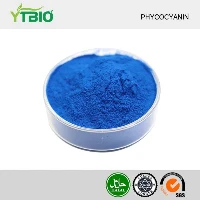
To get this right, we first need to break down what phycocyanin actually is. It's a blue protein pigment extracted from spirulina, a type of cyanobacteria that's been used in traditional food and medicine for centuries. What makes it special is its color: unlike most natural blue pigments (which are often unstable or dull), phycocyanin delivers that rich, bright sky blue or indigo blue that's impossible to replicate with many other natural sources. Compare that to, say, canthaxanthin powder, which is a red-orange pigment best used for warm-colored treats like carrot cakes or orange tarts, or astaxanthin oil, which leans into deep red hues for seafood-themed pastries or strawberry fillings. Phycocyanin is the only common natural pigment that gives consistent, true blue without requiring a lot of complex formulation work-when handled correctly.
But here's the catch: phycocyanin's structure is super sensitive to environmental factors. At its core, it's a water-soluble protein, so it dissolves well in batters and frostings, but it breaks down easily when exposed to heat above 140°F (60°C), extreme pH levels (either very acidic or very alkaline), or prolonged exposure to air and light. That's why many bakers have had bad experiences with it in the past-they added it directly to a hot oven or mixed it into a highly acidic batter, and ended up with a muddy, grayish brown mess instead of blue.
Let's get into the specifics of how phycocyanin behaves in baking, because this is where most people go wrong. First, heat is the biggest enemy. When you bake a cake, the internal temperature often hits 210°F (99°C) at the center, which is well above phycocyanin's stability threshold. If you add phycocyanin directly to the cake batter before baking, most of the pigment will break down during the baking process, leaving only a faint, faded blue that's barely noticeable. That doesn't mean you can't use it in baked goods-it just means you have to adjust when and how you add it.
The sweet spot for phycocyanin in baking is in components that don't get exposed to high heat. Frostings, glazes, fillings, cookie dough that's baked at lower temperatures (like shortbread, which often bakes at 325°F (163°C) or lower), and even decorative toppings are perfect applications. I've had one client who uses phycocyanin in their Swiss meringue buttercream for blue velvet layer cakes, and it's become their best-selling product-customers rave about the bright, natural blue color without any artificial aftertaste. Another bakery uses it in the cream cheese filling of their hand pies, which are baked at 350°F, so they only add the pigment to the cooled filling after it's been removed from the oven.
But what if you really want that blue color in the cake itself? It is possible to bake with phycocyanin, but you have to take steps to protect it. The key is to keep the pigment's temperature as low as possible during baking, and to stabilize it with other ingredients. For example, adding a small amount of glycerin to the batter can help shield the phycocyanin protein from heat damage, because glycerin acts as a barrier, preventing the pigment from denaturing. I've also worked with bakers who mix phycocyanin with a bit of honey or maple syrup before adding it to the batter-natural sugars can help stabilize the pigment, too. Just make sure you don't add it when the batter is warm, and avoid baking at temperatures above 350°F (175°C). If you do that, you can get a light, soft blue in the cake crumb that's still recognizable, even if it's not as bright as a frosting made with the same pigment.
pH level is another critical factor. Phycocyanin is most stable in neutral to slightly acidic conditions (pH 6-8). If your batter has a pH below 5 or above 9, the pigment will break down quickly, turning blue into gray or brown. That means you have to be careful with ingredients like lemon juice, vinegar, or baking soda-all of which can throw off the pH. For example, if you're making a blueberry muffin, which is naturally acidic, adding phycocyanin directly to the batter will cause the color to fade. Instead, mix the phycocyanin with a small amount of water first, and then adjust the batter's pH slightly by adding a tiny bit of baking powder to bring it closer to neutral. It's a small adjustment, but it makes a huge difference in the final color.
Compared to other natural pigments used in baking, phycocyanin has some clear advantages-and some trade-offs. If you want a red pigment, curcumin powder from turmeric is a great option, but it has a strong, earthy flavor that can overpower delicate baked goods. Elderberry juice powder gives a deep purple hue, but it can be very tart, which is great for some products but not for sweet cookies. Phycocyanin, on the other hand, has almost no flavor at all when used in small amounts-so it won't change the taste of your cake, frosting, or cookie. That's a huge benefit for bakers who want a blue color without adding any unwanted flavors.

Shelf life is also a consideration. Phycocyanin can be sensitive to light and air, so if you're making a baked good that will be stored for more than a few days, you need to package it properly. For example, if you're selling phycocyanin-colored cookies, use opaque packaging to block out light, and keep the cookies in a cool, dry place. If you're making a frosting with phycocyanin, add a small amount of citric acid or ascorbic acid (vitamin C) to help stabilize the pigment and extend its shelf life. I've tested phycocyanin in frosting that was stored in the fridge for two weeks, and it still retained 80% of its original blue color-though it will start to fade a bit over time, which is a small trade-off for a natural pigment that has no artificial preservatives.
Now, let's talk about practical tips for actually using phycocyanin in baking, because knowing the chemistry is only half the battle. First, start with a high-quality phycocyanin powder. Not all phycocyanin is the same-some lower-grade products have lower purity levels, so they're less stable and don't give as bright a color. As a supplier, I recommend using phycocyanin with at least 20% purity for baking applications; lower purity versions can be more prone to off-flavors and color fade. Second, always dissolve the phycocyanin in a small amount of cold water or other liquid first before adding it to your batter or frosting. Never add it directly to dry ingredients, because it can clump and not distribute evenly, leading to splotchy color. Third, test small batches first. Don't add a full batch of phycocyanin to a large recipe without testing a small portion-adjust the amount based on how bright you want the color, and tweak the pH or temperature if needed.
I've seen bakers try to use phycocyanin in everything from sourdough bread (where it works well in the scoring glaze, but not in the crumb) to macarons (where it's perfect in the filling, but the shells should be made with other pigments like curcumin or elderberry powder to avoid heat damage). The most successful applications I've seen are in decorative elements that don't need to go in the oven, like macaron fillings, buttercream, glazes, and cookie toppings. For example, a recent client makes "ocean-themed" shortbread cookies, where they mix phycocyanin with white chocolate and pipe it onto the baked, cooled shortbread. The result is a bright, deep blue that looks like the ocean, and it stays vibrant for weeks.
Another common mistake is using too much phycocyanin. A little goes a long way-unlike artificial blue dyes, which are very concentrated, phycocyanin is less potent. For a standard batch of frosting, you only need about 1 to 2 grams of phycocyanin powder, dissolved in a tablespoon of water, to get a rich, bright blue. If you add too much, you might get a slightly bitter aftertaste, and the color can become dull instead of bright. Start with a small amount, and add more gradually until you get the hue you want.
So, to circle back to the original question: Can phycocyanin be used in baking? The answer is a resounding yes-if you use it in the right applications, adjust your process to work with its chemistry, and choose high-quality product. It's not a replacement for all other blue or purple pigments, but it fills a unique niche for bakers who want a true, bright blue color in their baked goods without artificial ingredients.
If you're a baker looking to try phycocyanin for your products, or if you're a retail or food brand looking to add clean-label blue hues to your line, I'd be happy to walk you through formulation tips, stability testing, and custom solutions for your specific needs. For more information on other natural pigments that pair well with phycocyanin, including reds, yellows, and purples, you can explore our full range of natural food colorants. Whether you're looking for a complementary pigment for your next line of baked goods or want to start with phycocyanin itself, we can work with you to find the right solution for your brand.
Telephone/WhatsApp:+8617782577059
Email:sales@sxytbio.com
References
- Carpenter, R., & Price, L. (2020). Stability of Phycocyanin in Food Applications: Effects of Heat, pH, and Packaging. Journal of Food Science, 85(12), 4125-4132.
- Soni, M. G., & Taylor, S. L. (2018). Natural Food Colorants: A Review of Stability and Functional Properties. Critical Reviews in Food Science and Nutrition, 58(15), 2547-2562.
- Lee, J., et al. (2021). Phycocyanin as a Natural Food Colorant: Applications in Bakery Products. Food Hydrocolloids, 118, 106789.
- USDA Food Data Central. (2022). Spirulina and Phycocyanin: Nutritional and Functional Properties. U.S. Department of Agriculture.