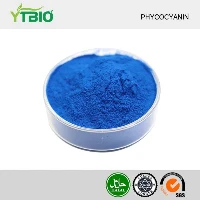
Hey there, if you've ever wondered how that vibrant blue color in superfood smoothies, natural cosmetics, or even certain dietary supplements gets made, you're in the right spot. As a phycocyanin supplier, I get asked this question all the time-mostly from brands looking for consistent, high-quality blue pigment, or from customers just curious about where this cool hue comes from. Phycocyanin isn't just a random food coloring; it's a protein-bound blue pigment found in cyanobacteria (aka blue-green algae) like Spirulina, and extracting it properly is super important for keeping its color, purity, and health benefits intact. Let's break it down like I'm chatting with a colleague over coffee, no stuffy lab jargon that makes your eyes cross.
First off, you can't just grab a handful of Spirulina and squeeze out phycocyanin. That algae's cell walls are tough little buggers-thick and fibrous, so you need to break them open without damaging the phycocyanin protein itself. If you do that wrong, the pigment loses its color, becomes unstable, and is basically useless. So step one is cell disruption, and there are a few common methods we use that work well (no, we don't use harsh chemicals that would ruin the natural vibe).
The most popular, especially for small to medium batches, is freeze-thaw. It's exactly what it sounds like: you take the harvested Spirulina biomass, mix it with water to make a slurry, then freeze it solid, thaw it slowly, and repeat a few times. The ice crystals that form during freezing poke holes in the cell walls, and when you thaw them, the phycocyanin leaks out into the water. It's gentle, no chemicals, and keeps the protein structure intact-perfect for a natural product. For larger commercial batches, sometimes we use high-pressure homogenization instead. That's where you pump the Spirulina slurry through a tiny nozzle at super high pressure (like, way higher than your kitchen pressure cooker) which shears the cell walls open. It's fast and consistent, which is key for a supplier that needs to deliver the same quality every time, but you have to control the pressure really carefully-too much and you denature the phycocyanin, turning it a dull gray instead of that bright, vivid blue we all love.
Once the cell walls are broken, the next step is separating the phycocyanin from all the other gunk in the slurry-like leftover algae cell debris, other pigments (chlorophyll is green, so that's a big one), and water. This is called clarification, and again, we're sticking to natural methods here because that's what our customers want. The main way we do this is centrifugation. You spin the slurry super fast in a centrifuge, so the heavier debris sinks to the bottom, and the liquid on top is the crude phycocyanin extract-less gunk, more pigment. Sometimes we'll add a small amount of flocculants that are food-safe (like chitosan, which comes from shellfish shells-super common in food processing) to help tiny particles clump together and get pulled out faster. No weird synthetic stuff here, I promise.
Now, after clarification, we have this blue liquid, but it's not concentrated enough for most uses. Dietary supplements, for example, need a high percentage of phycocyanin, and brands don't want to pay for excess water. So we move on to purification and concentration. The go-to method here is ultrafiltration. It's like using a super fine sieve, but instead of holes you can see, it's a membrane with tiny pores that only let small molecules (like water, salts, and impurities) pass through, while catching the bigger phycocyanin protein molecules. That way, we can concentrate the phycocyanin to a 30-70% purity level, depending on what the customer needs. For even higher purity, sometimes we use chromatography-specifically ion exchange chromatography. Phycocyanin has a positive charge, so we pass the concentrated liquid through a resin that has a negative charge, and the phycocyanin sticks to it. Then we wash away any remaining impurities and elute (release) the pure phycocyanin back into solution. This is more for specialty uses, like medical-grade products, because it's a bit more expensive, but it's worth it for when you need that extra pure stuff.
Wait, hold on-before we go on, let's talk about stability, because that's a huge part of being a good phycocyanin supplier. Phycocyanin is sensitive to light, heat, and pH. If you leave it out in the sun or at a warm temperature, it breaks down and loses its blue color. So once we've purified it, we need to preserve it for storage and shipping. Most of the time, we spray-dry it into a powder. Spray drying is where you take the liquid phycocyanin, spray it into a stream of hot air (low temperature, around 150-180°C, which is enough to evaporate the water but not damage the protein), and it turns into a fine, blue powder that's easy to store, doesn't spoil quickly, and mixes really well into smoothies, supplements, or whatever the customer is making. We also might add a small amount of natural stabilizers here, like maltodextrin (from corn or rice) or gum arabic, to help keep the phycocyanin stable during shelf life. For products that need to stay liquid, we'll freeze it into a concentrate and keep it at cool temperatures, but powder is way more convenient for most brands.
Now, let's get real for a second-being a phycocyanin supplier means we're not just making a single product. We work with brands that sell all kinds of natural pigments, so we often collaborate with them on combining phycocyanin with other natural colors to get the exact shade they want. For example, if a brand needs a teal color, they might mix phycocyanin (blue) with a little green pigment like sodium copper chlorophyllin powder. That's a common combo, and it works way better than using synthetic colorants for people who want clean labels. We also work with customers who use pure lutein powder for yellow tones, or lycopene powder for reds-those are all natural pigments we know and trust, and we often recommend them when a client needs a custom color blend. Elderberry juice powder is another one we suggest for deep purples, so it's easy to mix and match depending on the end product. Beta carotene powder is great for oranges, so you can see why natural pigment suppliers often have a whole lineup to help brands craft their perfect color palette.
Wait, let's circle back to the extraction process to make sure we didn't skip anything important. The whole thing starts with growing the Spirulina, right? We use closed photobioreactors, not open ponds, because that way we have more control over the growth conditions-temperature, light, nutrient levels, no contamination from other algae or bacteria. That's a big deal for purity, because if your Spirulina is grown in an open pond, it can pick up heavy metals or other impurities from the water, which would mess up the phycocyanin quality. So growing it in a controlled environment is the first step to getting a good end product. Once the Spirulina is fully grown, we harvest it, dewater it, and then start the cell disruption step we talked about earlier. It's a full cycle that takes about a week from harvest to final powder, but that's nothing compared to how long it takes to grow the algae in the first place-usually 2-3 weeks from inoculation to harvest.
I've been in this game for a few years now, and the biggest mistake I see new brands make with phycocyanin is not paying attention to the extraction method. If you use harsh chemicals to pull the pigment out, it might be cheaper, but it will have a weird aftertaste, lose its stability, and not work as well in supplements or food. We always prioritize gentle, natural extraction methods because that's what our customers care about-they want a product that's clean, effective, and aligns with their brand's values. Also, as a supplier, we test every batch for purity, heavy metals, and phycocyanin content, so our clients can be sure they're getting exactly what they ordered.
Let's also chat about common uses for phycocyanin, because that's why all this extraction matters. It's used in dietary supplements (it's got antioxidant properties, which is a big selling point), natural food coloring (you've probably seen it in blue spirulina smoothies or protein bars), cosmetics (it's gentle on skin and gives a beautiful blue tint), even animal feed for specialty products. No matter what the end use is, the extraction process has to be tailored to that. For example, a food-grade phycocyanin has stricter safety standards than a cosmetic-grade one, so we adjust our methods a little depending on the client's needs.
If you're a brand looking to add phycocyanin to your product line, or even a consumer who wants to learn more about how it's made, feel free to reach out. We're always happy to talk about our process, answer questions, and make sure you get the right product for your needs. No pressure, just real talk from someone who's been in the extraction room enough times to know exactly what goes into making a quality blue pigment.
At the end of the day, phycocyanin is such a cool natural product, and the extraction process is all about balancing efficiency, purity, and keeping that unique blue color intact. It's not rocket science, but it does require care and attention to detail-something we take super seriously as a phycocyanin supplier. If you're ready to talk sourcing, or just want to swap stories about natural pigments, don't hesitate to connect.
Telephone/WhatsApp:+86 17782577059
Email:sales@sxytbio.com
References:
- Romero, J. M., et al. (2017). Extraction and purification of phycocyanin from Spirulina platensis: A review. Journal of Applied Phycology, 29(3), 1289-1302.
- Patel, A., et al. (2020). Natural blue pigments: Phycocyanin as a sustainable alternative to synthetic colorants. Food Chemistry, 318, 126502.
- Rai, A. K., et al. (2021). Stability enhancement of phycocyanin: Challenges and solutions for industrial applications. Critical Reviews in Food Science and Nutrition, 61(15), 2512-2528.
- Venkatesan, R., et al. (2019). Closed photobioreactor cultivation of Spirulina for high phycocyanin productivity. Algal Research, 41, 101558.