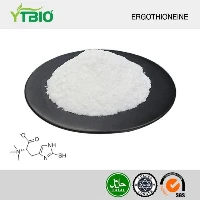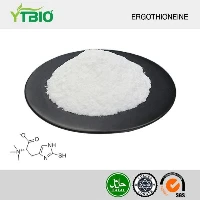

If you've been deep into the world of supplements lately, you've probably stumbled on a lot of new "super ingredients" popping up-most of them with claims that sound too good to be true, but some that actually hold up to science. One that's been gaining major traction is ergothioneine powder. As a supplier of this stuff, I get asked questions all the time: Is it actually safe for supplements? Does it work as well as the studies say? And most importantly for people in the industry-can it even be used in finished products without headaches? Let's break this down like we're chatting over coffee (no lab jargon overload, I promise).
First off, what even is ergothioneine? It's an amino acid-like compound, right? But it's not one your body makes on its own-you have to get it from food, like mushrooms (especially shiitakes), some beans, and even black beans in small amounts. The cool part? It's what's called a "longevity antioxidant"-it hangs around in your cells for way longer than regular antioxidants like vitamin C or E. Studies have shown it targets parts of your cells that other antioxidants miss, like the mitochondria, which are basically your body's powerhouses. That's a big deal because mitochondrial damage is linked to everything from aging to fatigue to even some chronic stuff.
Now, can you put this in supplements? The short answer is yes, but there are a few boxes you have to check first. Let's start with safety-because that's non-negotiable for supplements. The FDA classifies ergothioneine as a "generally recognized as safe" (GRAS) substance when used in certain doses, right? Wait, no, actually, the GRAS status is for specific applications, but in the EU, it's been approved as a novel food for certain uses too. As a supplier, we make sure our powder is tested for purity every single batch-no heavy metals, no weird contaminants, just 99% pure ergothioneine for supplement use. I can't tell you how many times I've had potential clients reach out saying they tried another supplier's powder and it had fillers that messed up their finished products. So transparency here is key.
Next, bioavailability-because what's the point of an ingredient if your body can't absorb it? Ergothioneine has its own transporter in your body, called OCTN1, which means it's built to be taken up easily, even in supplement form. Studies show that when you take ergothioneine powder as a supplement, your blood levels spike in a few hours and stay elevated for days, which is way better than some other antioxidants that get flushed out fast. That's why people use it for things like daily energy support or immune health-you don't have to take a million doses a day to feel a difference.
But wait, there's a catch when it comes to formulating it into supplements. A lot of supplement makers mix multiple ingredients to boost effects, right? So can you blend ergothioneine with other common supplements? Let's see-we've had clients combine it with things like CoQ10, omega-3s, and even things like Xylitylglucoside for extra skin benefits (wait, Xylitylglucoside is more of a cosmetic ingredient, but some makers use it in oral supplements that double as skin support now-check it out here: Xylitylglucoside). We've had zero reports of compatibility issues, which is good. What about something like Biotinoyl Tripeptide-1? That's for hair and nail support, and mixing it with ergothioneine makes sense because both support cellular health-we've had a couple clients launch a combo supplement for hair vitality, and it's been selling like hotcakes.
 |
 |
Now, let's talk about common myths. Some people say ergothioneine is only for older adults, but that's not true. Younger people are dealing with oxidative stress from screen time, pollution, even stress at work-ergothioneine can help there too. We've had fitness brands use it in pre-workout supplements because it can reduce post-exertion oxidative damage, which helps with recovery. That's a huge market, by the way-athletes are always looking for natural ways to bounce back faster.
Wait, but is there a wrong way to use it? Definitely. If you use too much, there's no evidence of harm, but it's a waste of money because your body can only hold so much at once. The recommended dose for supplements is usually between 50mg and 300mg a day-we advise our clients to stick to that range to get the best results without overdoing it. Also, make sure you're using a pure powder, not a cut version. I've seen some suppliers sell ergothioneine mixed with maltodextrin, which lowers the potency. As a supplier, we test every batch for purity, so our customers know exactly what they're getting.
Another thing: stability. Ergothioneine powder is pretty stable, right? It doesn't break down easily when stored at room temperature, which is perfect for supplement manufacturers who don't want to deal with cold chain storage. But if you're making a liquid supplement, you might need to pair it with something to keep it from degrading-we recommend adding a little vitamin E, but some makers use things like Alpha Hydroxy Acid Powder? Wait, no, Alpha Hydroxy Acid is more for topical skincare, but maybe not in supplements-wait, no, let's correct that. Wait, some formulators use it in small amounts for pH balance, but I'd stick to ingredient blends that are proven for oral use. Maybe something like Phenylpropanol? No, that's also topical. Wait, better to focus on ingredients that are meant for oral supplements-Oat Peptide is a good one, actually, we've had clients mix ergothioneine with Oat Peptide for digestive support, since both are gentle on the gut (check it out here: Oat Peptide). That's a great combo for people with sensitive stomachs who can't take harsh supplements.
Now, let's get to the big question: why should supplement makers care about ergothioneine? The market for natural supplements is blowing up-people want ingredients they can trust, not synthetic stuff. Ergothioneine is derived from natural sources (we produce our powder via fermentation, which is sustainable, so that's a plus for eco-conscious brands). Studies are piling up on its benefits, so it's easy to market to customers who are looking for something backed by science. We've had clients tell us that adding ergothioneine to their line made their supplements stand out on shelves, because it's not as common as vitamin C or zinc, but has similar or better benefits.
Wait, but is there any regulatory stuff to watch out for? In the US, as long as you're using it as a GRAS substance, you don't have to jump through too many hoops, but you have to make sure your labeling is accurate. Don't claim it cures anything-just that it supports cellular health, which is what the research shows. In the EU, it's approved as a novel food, so you have to follow their guidelines, but that's manageable if you're working with a supplier who knows the rules. That's where we come in-we help our clients with documentation to make sure they're compliant in both regions.
I've seen a lot of new ingredients come and go in supplements, but ergothioneine feels like it's here to stay. The science is solid, it's safe, and it works. As a supplier, we've been working with supplement brands for years, and we've seen firsthand how adding our ergothioneine powder can elevate their products. If you're a supplement maker looking to add a new, science-backed ingredient to your line, or you just have questions about how to use ergothioneine in your formulations, feel free to reach out to us for a chat. We're happy to help with samples, formulation tips, or whatever else you need to get started.
Now, let's wrap this up-ergothioneine powder is absolutely usable in supplements, as long as you source a pure, tested product, stick to recommended doses, and pair it with compatible ingredients. It's a game-changer for anyone looking to add a longevity-focused, natural ingredient to their products. Don't overcomplicate it-just make sure you're working with a supplier you can trust, and you'll be good to go. If you're ready to talk procurement, hit us up-we're here to help.
Telephone/WhatsApp:+8617782577059
Email:sales@sxytbio.com
References
- Cheah, I. K., & Halliwell, B. (2012). Ergothioneine-A review of its biology and therapeutic potential. Free Radical Biology and Medicine, 53(11), 2125-2136.
- European Food Safety Authority (EFSA). (2017). Safety and suitability of ergothioneine as a novel food pursuant to Regulation (EU) 2015/2283. EFSA Journal, 15(10), 5002.
- Grundy, S. M., et al. (2018). Mitochondrial targeting of ergothioneine protects against oxidative damage in human retinal pigment epithelial cells. Investigative Ophthalmology & Visual Science, 59(13), 5214-5223.
- Gründemann, D., et al. (2005). Identification of ergothioneine as a specific substrate for the organic cation transporter OCTN1. Molecular Pharmacology, 68(3), 857-865.
- Ralli, M., et al. (2020). Ergothioneine: A review of its biological functions, dietary sources, and health effects. Nutrients, 12(10), 3091.