

Shaanxi Yuantai Biological Technology Co., Ltd. is one of the most reliable manufacturers and suppliers of bulk sodium alginate in China. With abundant experience, we warmly welcome you to wholesale bulk bulk sodium alginate for sale here from our factory. Quality products and reasonable price are available.
Introduction to Sodium Alginate
Bulk Sodium alginate is a by-product of extracting iodine and mannitol from brown algae such as kelp or sargassum. Its molecule is composed of β-D-mannuronic acid (M) and α-L-guluronic acid (G), connected by (1→4) bonds. It is a natural polysaccharide with the stability, solubility, viscosity, and safety required for pharmaceutical excipients. Sodium alginate is widely used in the food industry and pharmaceutical fields.
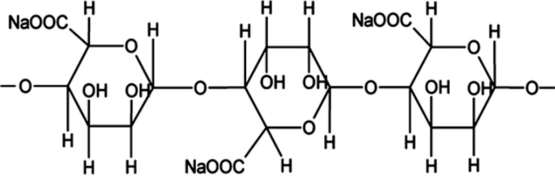
When sodium alginate is used as a hydrogel substrate, it can also be used to prepare composite hydrogels with other natural or synthetic polymers through physical blending or chemical crosslinking. These composite hydrogels can exhibit improved mechanical properties, drug release control, and specific functionalities, thus broadening the applications of sodium alginate in medical and environmental remediation fields.
Product details list:
| CAS | 9005-38-3 |
| Molecular formula | C5H7O4COONa |
| EINECS | 618-415-6 |
| Melting point | 99°C |
| Density | 1.0g/cm3(Temp:25°C) |
| FEMA | 2014|ALGIN(LAMINARIASPP.ANDOTHERKELPS) |
| Solubility | Slowly soluble in water forming aviscous, colloidal solution, practically in solubleinethanol(96percent). |
| Odor | odorless |
| PH value | 6.0-8.0 (10mg/mLinH2O) |
| Water solubility | Soluble in water.Insoluble in alcohol,chloro for mandether. |
COA OF Sodium Alginate
|
ITEM |
STANDARD |
TEST RESULT |
|
|
Content |
90.8%-106.0% |
99.3% |
|
|
Viscosity |
According to request |
2140 mpa.s(2% solution natural basis) |
|
|
Physical & Chemical |
|||
|
Appearance |
White Powder |
Complies |
|
|
Partical Size |
95% pass 80 mesh |
Complies |
|
|
PH |
6.0-8.0 |
6.9 |
|
|
Loss on Drying |
≤15.0% |
11.1% |
|
|
Water-insoluble matter |
≤2.0% |
0.2% |
|
|
Ash |
18.0-27.0% |
24.6% |
|
|
Heavy Metal |
|||
|
Total Heavy Metals |
≤20ppm |
<20ppm |
|
|
As |
≤3.0ppm |
<3.0ppm |
|
|
Pb |
≤5.0ppm |
<5 .0ppm |
|
|
Cd |
≤1.0ppm |
<1.0ppm |
|
|
Hg |
≤1.0ppm |
<1.0ppm |
|
|
Microbiological Test |
|||
|
Total Plate Count |
≤5,000cfu/g |
600cfu/g |
|
|
Mold and Yeast |
≤500cfu/g |
<100cfu/g |
|
|
E.Coli |
≤10cfu/g |
<0.3cfu/g |
|
|
Salmonella |
Negative |
Negative |
|
|
Staphylococcus |
Negative |
Negative |
|
|
Conclusion |
Conform with specification |
||
|
Packing |
By 25kgs/Bag, inner by double plastic bag |
||
|
Shelf Life |
24 months under the above condition,and in it's original package |
||
Advantages of Bulk Sodium Alginate
As a thickening agent for beverages and dairy products, sodium alginate offers unique advantages in thickening. Its good fluidity makes drinks smooth, and it prevents viscosity drops during sterilization. For thickening, products with larger molecular weights should be used, and Ca should be added to increase viscosity.
As a high-grade stabilizer for ice cream and other cold drinks, sodium alginate ensures a smooth appearance and silky taste. Calcium alginate forms a stable thermo-irreversible gel, preventing roughness during transportation and storage, and maintaining ice cream shape despite temperature fluctuations. The product has a smooth, delicate texture and good taste, with addition rates generally between 1-3%.
Application Range and Dosage:
- China's Standards: Can be used in various foods in appropriate amounts according to production needs.
- US FDA (1989): Uses and limits include condiments (1%), candies and pastries (6%), gelatin and puddings (4%), canned food (10%), processed fruit and juice (2%), and other foods (up to 1%).
- Japanese Regulations: Used in ice cream to improve shape retention and structure (0.1% to 0.4%), and in fillings to impart cohesiveness and prevent ice crystal formation (0.1% to 0.7%).
Applications of Bulk Sodium Alginate
In Food:
Used as a stabilizer for ice cream to control ice crystal formation and improve taste.
Stabilizes mixed drinks like sugar water sorbet and frozen milk.
Used in dairy products to prevent adhesion and cracking.

In Pharmaceuticals:
Used as a binder for tablets and disintegrant for immediate-release tablets.
Added during granulation for easier production and stronger flakes.
Used in suspensions, gels, concentrated emulsions, and liquid medicines to increase viscosity and improve suspension of solids.
In Printing and Spinning:
Used as a reactive dye paste in printing and dyeing, superior to grain starch and other pastes.
Saves food resources and improves weaving efficiency in textile production.
In the Pharmaceutical Industry:
Used in gastrointestinal double-contrast barium sulfate preparations and as anticoagulant and lipid-lowering agents.
Replaces rubber and gypsum in dental impressions and makes hemostatic agents.
Study on Sodium Alginate Compound System
1. Gel Strength
The compounding of alginate with neutral linear polysaccharides (such as konjac gum, carrageenan, guar gum, etc.) significantly improves gel strength. Specifically, adding 4% konjac gum increases strength by 330%; adding 4% guar gum increases it by 220%; and adding 5% carrageenan increases it by approximately 200%. Furthermore, high-M type alginate compounded with chitosan is more effective in enhancing strength than high-G type compounded with konjac gum.
2. Gel Elasticity
The compounding of alginate with chitosan has a certain synergistic effect, but the improvement in elasticity is not significant. In contrast, gelatin, xanthan gum, carrageenan, and guar gum (except for konjac flour) all improve gel elasticity, with gelatin showing the most significant effect.
3. Gel Hardness
The compounding of chitosan, gellan gum, low-ester pectin, and carrageenan with alginate all improves hardness. The optimal conditions were: calcium chloride 0.6 mol/L, alginate to chitosan mass ratio of 19:1, and pH 7.0. A 10:1 ratio of gellan gum to chitosan increased hardness by approximately 15%; chitosan showed the most significant effect, achieving a hardness 4.3–100 times that of the control group.
4. Gel Water Retention
Adding 0.25%–0.75% xanthan gum slightly improved water retention, but the effect was not significant. Glycerin also improved water retention, but excessive amounts reduced gel strength and elasticity.
Why Choose Our Bulk Sodium Alginate
Shaanxi Yuantai Biotechnology Co., Ltd. (YTBIO) is a professional manufacturer and supplier of health food raw materials, finished products and functional cosmetic raw materials. Our company was established in 2014, with more than 20 years of manufacturing experience, can provide customers with perfect solutions.
We're professional Bulk Sodium Alginate manufacturers and suppliers in China, specialized in providing Trace Element Supplements with competitive price. We warmly welcome you to buy or wholesale bulk Sodium Alginate for sale here from our factory.
Company Advantage:
- Currently, we have branches and transit warehouses in Europe (Netherlands, Rotterdam), the United States and other places to provide more convenient services to local customers.
- Our products are produced strictly in accordance with the highest quality requirements and have obtained HACCP, ISO9001, ISO22000, HALAL, KOSHER, FDA, EU&NOP certification and NMPA registration certificates for various cosmetic ingredients.
- We can provide customized services at every stage from product formulation to product packaging, including the production, purification, packaging and other aspects of the product's raw materials, and provide OEM/ODM orders.
Certificates Obtained
We have our own factories, R&D, and quality inspection teams. We have obtained ISO9001, ISO22000, HALAL, KOSHER, HACCP, FDA, and other certificates, ensuring the quality of our products and our commitment to bringing high-quality products to customers.

Our Packaging

Our Team

Factory

Payment&Shipping


Hot Tags: bulk sodium alginate, China bulk sodium alginate manufacturers, suppliers, factory