Shaanxi Yuantai Biological Technology Co., Ltd. is one of the most reliable manufacturers and suppliers of gingerol powder in China. With abundant experience, we warmly welcome you to wholesale bulk gingerol powder for sale here from our factory. Quality products and reasonable price are available.
What is gingerol?
Gingerol Powder(6-Gingerol) is the most abundant (≥75%) and most bioactive gingerol component in ginger extract, possessing the characteristic strong pungent flavor of ginger. As a core active biomarker of ginger (Zingiber officinale), a plant in the ginger family, 6-gingerol exhibits anti-inflammatory effects. Pharmacological studies have confirmed its significant value in preventing and treating cardiovascular diseases, relieving joint pain, promoting gastric juice secretion, inhibiting abnormal intestinal fermentation, and promoting blood circulation.
YTBIO supplies gingerol with contents ranging from 1% to 20% and can customize. We own our factory, and all production processes strictly adhere to international certification systems such as cGMP, FSSC22000, BRC, HALAL, KOSHER, ISO9001, and ISO22000, providing you with ginger extract raw materials with clearly defined contents.
1% gingerol dissolved in water:

COA
|
Product Name |
Organic Ginger Extract |
|
Origin of plant |
Zingiber officinale Roscoe |
|
Origin of Country |
China |
|
PHYSICAL / CHEMICAL |
|
|
Active Ingredient |
Gingerol>4% |
|
Appearance |
Clean, fine powder |
|
Color |
Yellow Brown |
|
Taste & Odor |
Characteristic taste with original flavor |
|
Size |
100% pass 80 mesh |
|
Moisture |
<5% |
|
Ash |
<5% |
|
Extract Solvent |
Water |
|
Carrier |
Less than 10% organic rice maltodextrin |
|
Bulk Density |
50-65grams/100ml |
|
Total Heavy Metals |
<20PPM |
|
Pb |
<5PPM |
|
As |
<3PPM |
|
Cd |
<1PPM |
|
Hg |
<1PPM |
|
Pesticide Residue |
Complies with NOP & EOS organic standard |
|
MICROBIOLOGICAL |
|
|
TPC (CFU/G) |
< 10,000 cfu/g |
|
Mould & Yeast |
< 1000 cfu/g |
|
Coliforms |
<20 cfu/g |
|
Salmonella |
NEGATIVE |
|
S.AUREAUS |
NEGATIVE |
|
E.Coli |
NEGATIVE |
|
Storage |
Cool, Dry, Darkness, & Ventilative |
|
Package |
25kg/drum |
|
Shelf life |
2 years |
For more product specifications and the latest pricing, please feel free to contact us.
What are the benefits?
I. Activating Brown Adipose Tissue and Promoting Lipid Oxidation
6-Gingerol and 6-Shogaol can promote gene expression of uncoupling protein 1 (UCP1) in brown adipose tissue, increasing UCP1 protein levels by 4-6 times, thereby enhancing thermogenesis and improving energy metabolism. Regarding lipid oxidation, gingerol's stimulatory effect on three rate-limiting enzymes is significantly stronger than that of L-carnitine: gingerol can increase the expression level of hormone-sensitive lipase (HSL) to 1.5 times that of L-carnitine, the expression level of carnitine palmitoyltransferase-1 (CPT-1) to approximately 2 times, and the expression level of acyl-CoA oxidase (ACOX) to 6 times, thus more efficiently promoting fat breakdown, transport, and β-oxidation, supporting weight management and metabolic health.
II. Promoting Protein Digestion
Research by the Central Food Technology Research Institute (CSIR) in India found that daily consumption of ginger can shorten the residence time of protein in the stomach, promote digestion, and enhance intestinal absorption. Ginger's effect is particularly significant, increasing net protein utilization from 68.7% to 74%. In addition, gingerol can stimulate the gastric mucosa to promote gastric juice secretion, inhibit abnormal intestinal fermentation and promote gas expulsion, while enhancing intestinal peristalsis, thus improving digestive tract diseases such as indigestion, constipation, and dysentery.
III. Relieving Arthritis Pain
A clinical study of 120 patients showed that daily administration of 30 mg of ginger extract (approximately equivalent to 1 gram of ginger) for one month reduced the visual analog scale (VAS) score from 71.7±3.5 mm to 30±3.5 mm, and arthritis pain was reduced by 48.8%. Its mechanism of action lies in inhibiting prostaglandin synthesis, while simultaneously inhibiting the nuclear factor κB (NF-κB) and cyclooxygenase-2 (COX-2) inflammatory pathways, making it suitable for adjunctive intervention in rheumatoid arthritis, osteoarthritis, and sports-related joint injuries.
IV. Improving Cardiovascular Function
Gingerol has the effects of inhibiting platelet aggregation, anti-atherosclerosis, and regulating blood lipids, and can reduce the risk of low-density lipoprotein oxidation. Simultaneously, it can stimulate the vasomotor and respiratory centers, promote peripheral blood circulation, and exert diaphoretic and carminative effects, improving dizziness, headaches, cold hands and feet, and poor circulation caused by colds.
V. Antioxidant, Liver Protection, and Other Benefits
Gingerol is a potent antioxidant that can scavenge free radicals, activate the Nrf2 pathway, and inhibit the production of lipid peroxides, thereby reducing oxidative stress damage. Regarding liver and gallbladder health, gingerol reduces the content of mucoprotein in bile by inhibiting prostaglandin synthesis, maintaining bile component balance, and inhibiting gallstone formation. In addition, ginger has a serotonin-induced cooling effect, which can relieve motion sickness and dizziness caused by colds; it can also enhance immunity and improve nausea symptoms caused by morning sickness and motion sickness.
Extraction of Gingerol
The extraction of gingerol from ginger is of great significance for the high-value utilization of ginger and the development of the ginger industry. Common methods for extracting gingerol from ginger include pressing, organic solvent extraction, molecular distillation, enzymatic hydrolysis, ultrasonic extraction, microwave-assisted extraction, and supercritical CO2 extraction.
① Pressing. Pressing involves mechanically pressing the ginger extract to obtain a crude extract, which is then separated by precipitation to yield a small amount of gingerol. This process is simple and time-efficient, but the extraction yield is low and the presence of impurities is high, necessitating further purification and separation.
② Solvent Extraction. Solvent extraction relies on the principle of like dissolves like, taking into account the solubility of gingerol. An appropriate solvent is selected to maximize the extraction of gingerol components while controlling or minimizing the release of other components. Currently, highly polar solvents such as methanol, ethanol, butanol, and acetone are commonly used. However, due to concerns about the food safety of gingerol, ethanol is the primary solvent used.
③ Ultrasonic-assisted Extraction. Ultrasound-assisted extraction (UAE) utilizes the cavitation, mechanical, and thermal effects of ultrasound to effectively disrupt the ginger cell structure, promoting the rapid dissolution of gingerols and improving the gingerol extraction yield. UAE shortens extraction time, reduces energy consumption, and maintains a lower extraction temperature, which helps preserve gingerol activity and improves extraction efficiency. It is an effective method for gingerol extraction from ginger, but it also suffers from high noise levels and costs.
④ Microwave-assisted extraction. Microwave-assisted extraction utilizes the selective heating of microwaves, generating instantaneous high temperature and pressure, which ruptures the ginger cell walls, reduces mass transfer resistance, and rapidly dissolves the gingerols. Microwave-assisted extraction of gingerols offers advantages such as good selectivity, short extraction time, and high extraction efficiency. However, the relatively high initial equipment costs of this process have prevented industrial production and are currently limited to laboratory research.
⑤ Enzyme-assisted extraction. Enzyme-assisted extraction utilizes the highly specific nature of enzyme reactions. Selecting the appropriate enzyme specifically breaks down the ginger cell wall, disrupting the dense cell wall structure, reducing mass transfer resistance, and accelerating the dissolution of gingerols. Commonly used enzymes include cellulases and hemicellulases. Currently, there is limited research in China on enzyme-assisted extraction of gingerols from ginger. Enzyme-assisted extraction offers mild reaction conditions and high extraction yields for gingerols, but it also suffers from relatively long extraction times, stringent process requirements, and high costs. Currently, research is limited to laboratory studies.
⑥ Supercritical CO2 extraction. Supercritical CO2 extraction achieves separation and purification by adjusting the solubility of the supercritical fluid by adjusting temperature and pressure. This method offers the advantages of no solvent residue, high purity, simple operation, and high safety, but it also presents challenges in separating and recovering entrained agents.
⑦ Synergistic extraction. Using two or more extraction techniques to synergistically extract gingerols from ginger can complement each other's strengths. For example, CO2 extraction combined with ethanol-water solution for continuous liquid-liquid extraction can not only effectively remove impurities in ginger oleoresin, but also shorten the separation and purification time to obtain liquid gingerol with high content of gingerol and 6-gingerol, providing an effective new process route for gingerol extraction.
Applications of Gingerol
1. Applications in Food
Modern research shows that gingerol has excellent antibacterial and antioxidant properties, and has broad application prospects in food processing.
Adding gingerol to the processing of mango candies can reduce sugar and water loss in the mango slices. Multi-step optimization has reduced the loss of natural bioactive compounds present in mango, improved overall sensory scores, and minimized color variation, significantly improving the nutritional and functional qualities of the mango candies.

Adding gingerol to fruit and vegetable beverage processing can fully utilize its excellent functional properties, improve the short shelf life of fruit and vegetable juices, extend the shelf life of beverages, and reduce the need for artificial preservatives.
Extracted Gingerol Powder can also be added directly to fillings as a seasoning for even flavor. Adding it to fish and other seafood can help remove fishy smells and effectively prevent the presence of coarse ginger particles that affect the taste during consumption. It can also effectively reduce lipid oxidation, thereby extending the shelf life.
In marinated meat products, gingerol not only removes nitrites but also effectively maintains the brightness of minced meat. Films made from gingerol can inhibit fat oxidation in chilled pork, extending its shelf life. Cling film made from gingerol can be used to preserve eggs, offering environmentally friendly, natural properties that extend their storage life.
2. Applications in Medicine and Healthcare
Gingerol, one of the main active substances in ginger, exhibits anti-inflammatory and lipid-regulating activities.
The gingerols in gingerol can effectively alleviate vomiting caused by digestive tract diseases, with an inhibition rate of up to 85%. They can also alleviate vomiting caused by malignant tumors in chemotherapy patients, making them a novel antiemetic drug.
Gingerol can be used as an alternative to pharmaceuticals in the prevention and treatment of multifilariasis in fish. 10-gingerol at a concentration of 4 mg/L can protect healthy fish from infection with the multifilaria parasite. A concentration of 2 mg/L significantly reduces the infection rate and average infection intensity in grass carp, thereby increasing their survival rate.

3. Applications in Cosmetics
Gingerol is often used in cosmetics along with other ingredients in ginger. Adding gingerol-rich ginger juice to shampoo effectively removes dirt from the scalp and inhibits bacterial growth, strengthening hair roots and preventing hair loss.
In skincare products, gingerol not only acts as an antioxidant but also effectively removes oil from the face, inhibits bacterial growth, and reduces the appearance of oily skin. Facial masks containing gingerol can also reduce inflammation, acne, and soothe the skin.

Company and certificates obtained
Shaanxi Yuantai Biotechnology Co., Ltd. was established in 2014, mainly supplying herbal extracts, functional cosmetic raw materials, organic products, etc. We have our own factories, R&D and quality inspection teams, and have the conditions for development, production, and quality assurance. At present, we have obtained ISO9001, ISO22000, HALAL, KOSHER, HACCP, FDA and other certificates. Therefore, the quality of our products is guaranteed, and it is our original intention to bring high-quality products to customers.


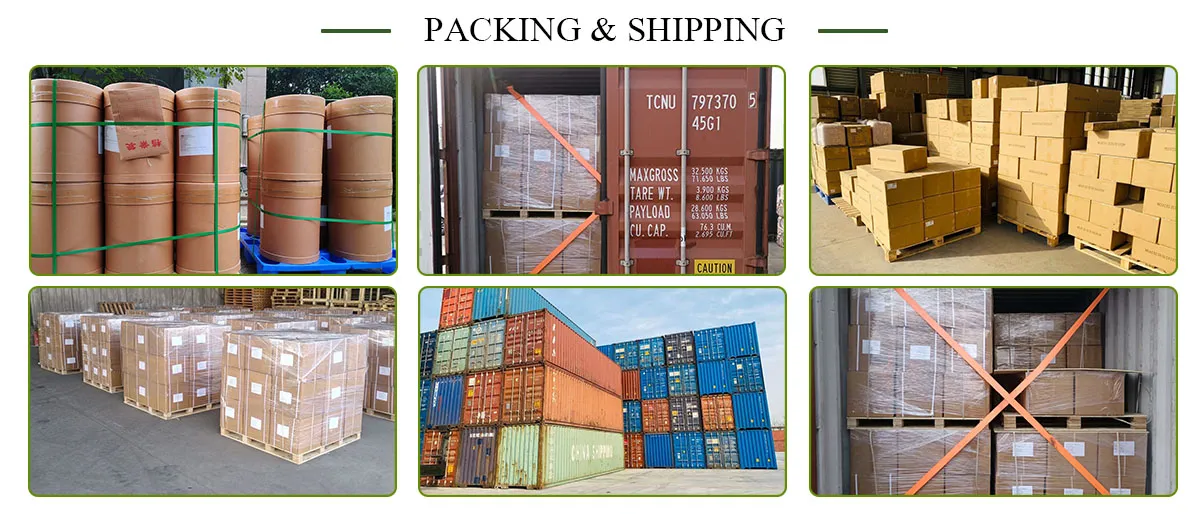
packaging
1KG/Aluminium bags , 25kg/barrel
Storage: Store in a cool, dry, clean place away from moisture and direct light.
We also have special packaging for special products, such as: retinal - cold chain transportation; deoxyarbutin - vacuum transportation
Our team
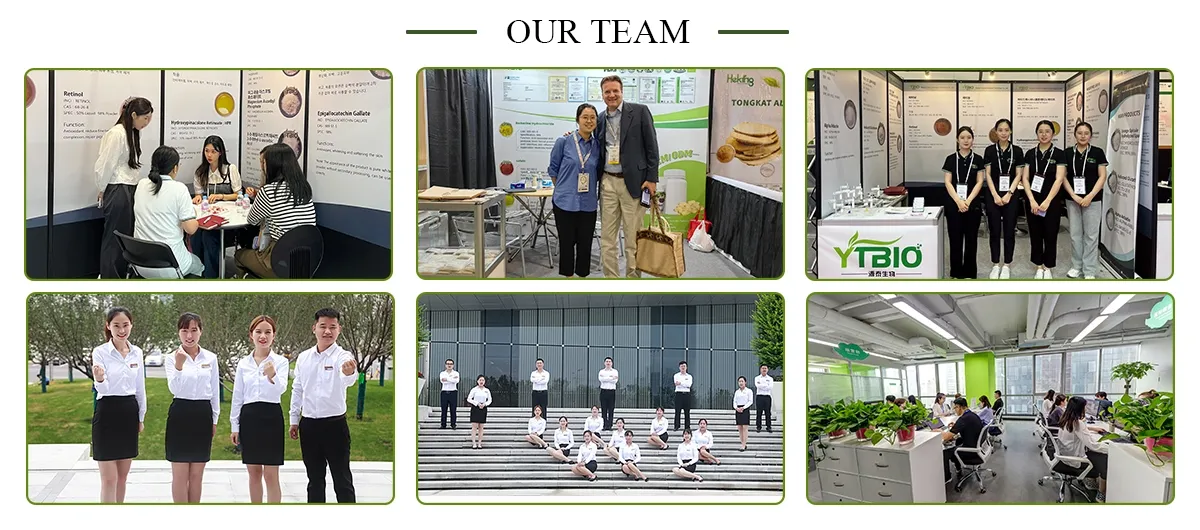
We have a professional R&D team and sales team, which not only ensure product quality, but also ensure a good cooperation experience for customers in the pre-sale, in-sale and after-sale processes. Our sales team has been trained in professional product knowledge, and can respond and solve every problem in cooperation in a timely manner
If you are interested in YTBIO's gingerol, please feel free to contact us via online consultation or by email. We will provide you with professional technical support and customized solutions.
Email:sales@sxytbio.com
WS:+8617782577059
Hot Tags: gingerol powder, China gingerol powder manufacturers, suppliers, factory