Shaanxi Yuantai Biological Technology Co., Ltd. is one of the most reliable manufacturers and suppliers of potassium stearate in China. With abundant experience, we warmly welcome you to wholesale bulk potassium stearate for sale here from our factory. Quality products and reasonable price are available.
Product Description
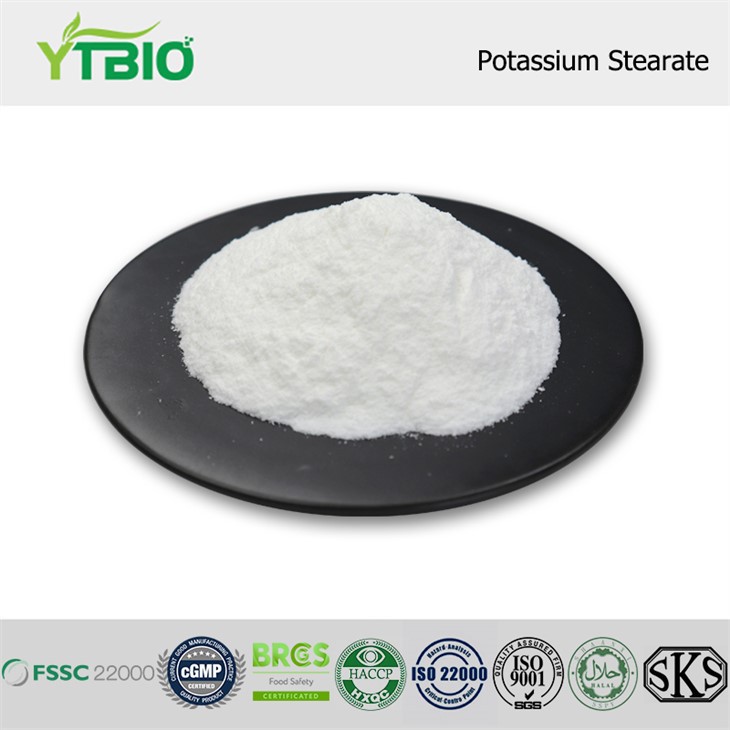
Potassium stearate is a fatty acid salt formed by the combination of stearic acid and potassium ions. It appears as a fine white powder with a smooth texture, no noticeable odor, is insoluble in water, but dispersible in oils and fats. It is chemically stable, does not easily deteriorate, and is easy to store. It is a safe and mild food-grade and commonly used additive in daily chemical products. With moderate surface activity, it possesses excellent emulsifying, thickening, lubricating, anti-caking, and system-stabilizing abilities. It allows for better integration of oils and water-based components, prevents stratification and sedimentation, and improves the fineness and formability of materials. In formulations, it can prevent powder clumping, improve texture smoothness, neutralize and regulate pH, and gently foam. It has extremely low irritation, good biocompatibility, and is not a burden on human metabolism; its safety has been widely verified. It is commonly added to solid beverages, meal replacement powders, and compressed products as an anti-caking agent and lubricant. It is also used in skincare and personal care products to adjust consistency, soften the skin feel, and stabilize the formula structure. Overall, it has a wide range of compatibility and is highly compatible with various raw materials, making it a commonly used mild and multifunctional excipient in industrial and formulation fields.
What are the benefits?
1. Surfactant and Cleaning Functions
As an anionic surfactant, it reduces the surface tension of liquids, effectively emulsifying and dispersing grease and dirt. It is commonly used in detergents and industrial cleaning agents to enhance detergency, making skin or object surfaces easier to clean while reducing skin irritation.
In cosmetics, it helps form stable emulsions or foams, improving the texture and feel of products, making skincare products easier to apply and absorb.
2. Lubrication and Release Functions
In the plastics, rubber, and metal processing industries, as a lubricant and release agent, it reduces friction between the mold and the material, prevents adhesion, improves molding quality, reduces scrap rates, and extends mold life.
Added to lubricating oils and greases, it enhances lubrication, reduces mechanical wear, and improves equipment operating efficiency.
3. Stabilizing and Thickening Functions
In the cosmetics, food, and coating industries, as a stabilizer and thickener, it improves product stability, prevents component separation or sedimentation, and extends shelf life.
In food, it improves the taste and texture of bread, pastries, etc., making the product softer and more delicate.
4. Antistatic and Softening Effects
In the textile industry, as a fiber softener and finishing agent, it can enhance the softness of fabrics, reduce static electricity, and make clothing more comfortable and easier to care for.
Application directions
1. Daily Chemical Industry
- Detergent Products: A core ingredient in liquid soaps, transparent soaps, and shaving creams. Its potassium salt properties make it more soluble in cold water than sodium salts, producing rich, fine foam with strong cleansing power and a refreshing feel.
- Cosmetics: In creams, lotions, shampoos, foundations, and loose powders, it acts as an O/W (oil-in-water) emulsifier, stabilizing the oil and water phase mixture, preventing separation, and adjusting viscosity to improve usability.
2. Food Industry
- Emulsifiers: Used in pastries, chocolates, ice cream, margarine, and other foods to prevent oil-water separation, improve taste and texture, and inhibit blooming on chocolate surfaces.
- Anti-caking Agents: Added to powdered foods such as milk powder, powdered sugar, and cocoa powder, adsorbing onto the surface of powder particles to prevent moisture absorption and clumping, maintaining a free-flowing state.
- Stabilizers: Maintain the stability of food systems, preventing component precipitation or aggregation.
3. Plastics Industry
- Lubricants: In the processing of polyolefins (such as PE, PP), polycarbonate (PC), ABS, and other plastics, they reduce intermolecular friction, lower melt viscosity, improve processing fluidity, and prevent molten material from adhering to the surface of processing equipment.
- Mold Release Agents: Help plastic products smoothly eject from molds, improving production efficiency and product surface finish.
- Stabilizers: Provide some thermal stabilization for certain polymers, delaying material degradation.
4. Rubber Industry
- Vulcanization Accelerators: Enhance the flexibility and durability of rubber, accelerate the vulcanization reaction, and improve the physical and mechanical properties of rubber.
- Dispersants: Improve the dispersibility of fillers in rubber, reduce material viscosity, and improve the surface quality and processing efficiency of rubber products.
5. Textile Industry
- Softeners: Used in fiber finishing to enhance the softness and antistatic properties of fabrics, reducing friction and static electricity in textiles during production.
- Finishing Agents: Improve the hand feel and appearance of fabrics, enhancing the quality and processability of textiles.
6. Coatings Industry
- Dispersants: Help pigment particles disperse evenly in coatings, prevent sedimentation, and ensure uniform coating color. Matting agents: Added to certain varnishes, they create a fine roughness on the paint film surface, producing a matte (glossy) effect.
7. Pharmaceutical Field
- Excipients, emulsifiers, and stabilizers: Used in the preparation of emulsions, ointments, tablets, and other dosage forms to help disperse and stabilize drugs, improving their bioavailability and stability.
Company introduction and certificates obtained
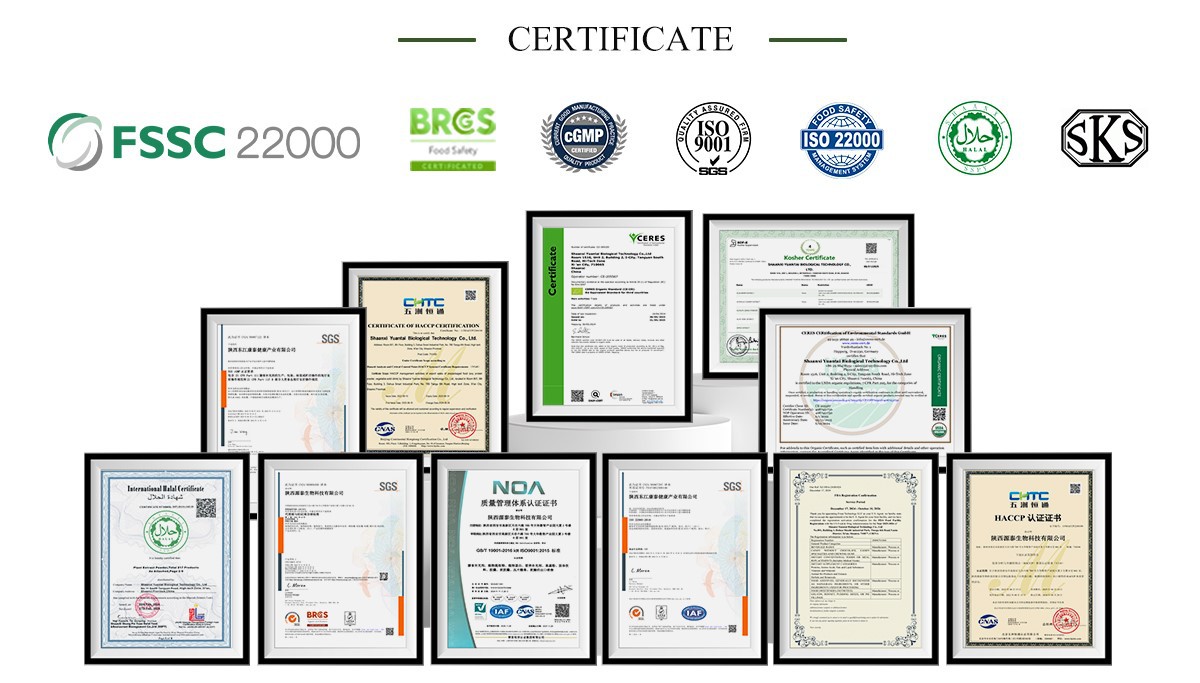
Shaanxi Yuantai Biotechnology Co., Ltd. was established in 2014, mainly supplying herbal extracts, functional cosmetic raw materials, organic products, etc. We have our own factories, R&D and quality inspection teams, and have the conditions for development, production, and quality assurance. At present, we have obtained ISO9001, ISO22000, HALAL, KOSHER, HACCP, FDA and other certificates. Therefore, the quality of our products is guaranteed, and it is our original intention to bring high-quality products to customers.
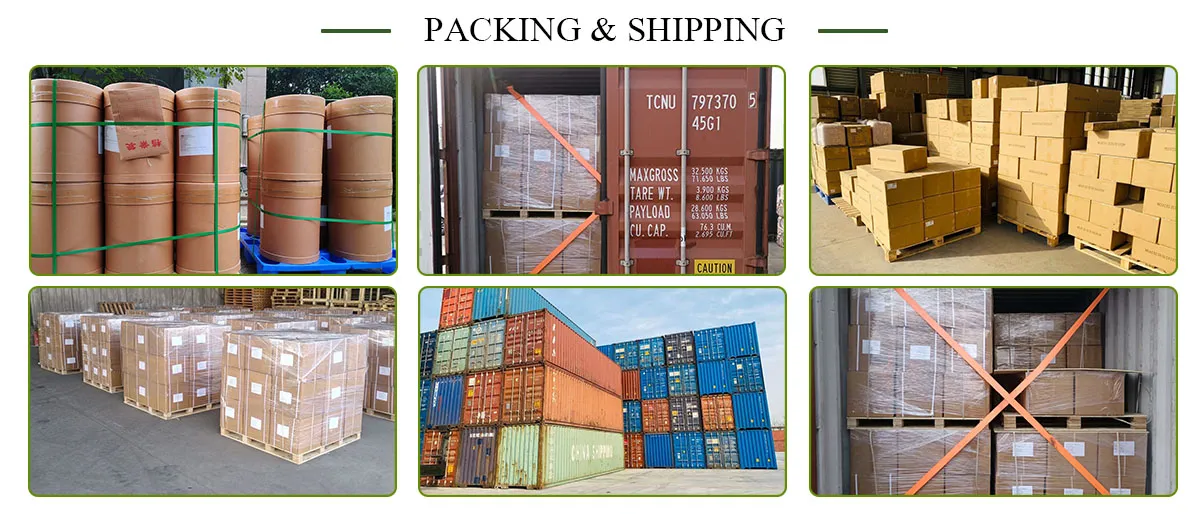
Our packaging
1KG/Aluminium bags , 25kg/barrel
Storage: Store in a cool, dry, clean place away from moisture and direct light.
We also have special packaging for special products, such as: retinal - cold chain transportation; deoxyarbutin - vacuum transportation
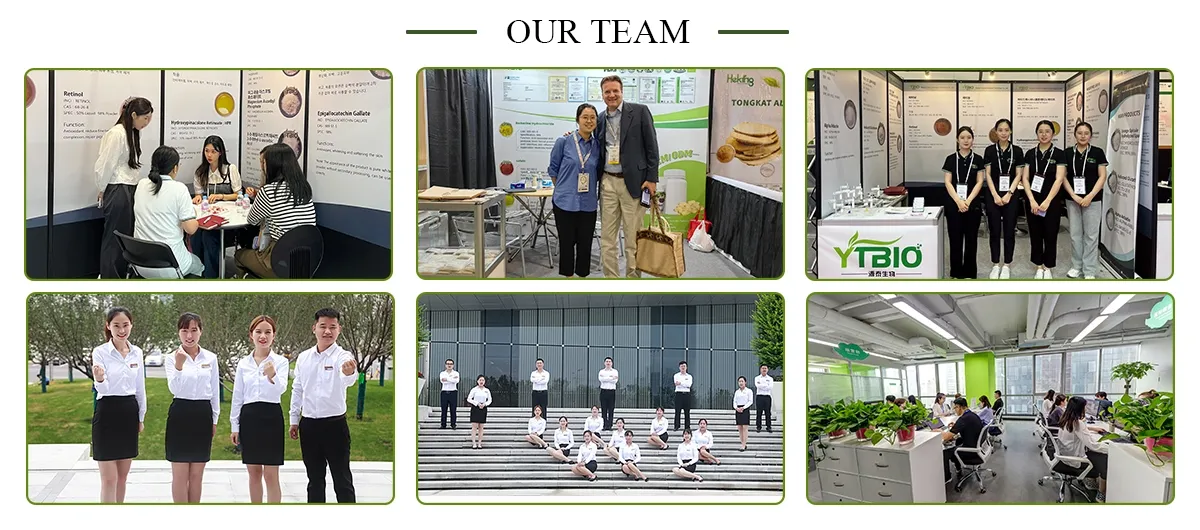
Our team
We have a professional R&D team and sales team, which not only ensure product quality, but also ensure a good cooperation experience for customers in the pre-sale, in-sale and after-sale processes. Our sales team has been trained in professional product knowledge, and can respond and solve every problem in cooperation in a timely manner

The payment methods we support are: T/T, VISA, XTransfer, Master Card, Western Union, Alibaba Payment, e-Checking, Online Bank Payment
We support shipping by sea, air, DHL, FedEx, TNT, UPS, EMS, SF

Hot Tags: potassium stearate, China potassium stearate manufacturers, suppliers, factory