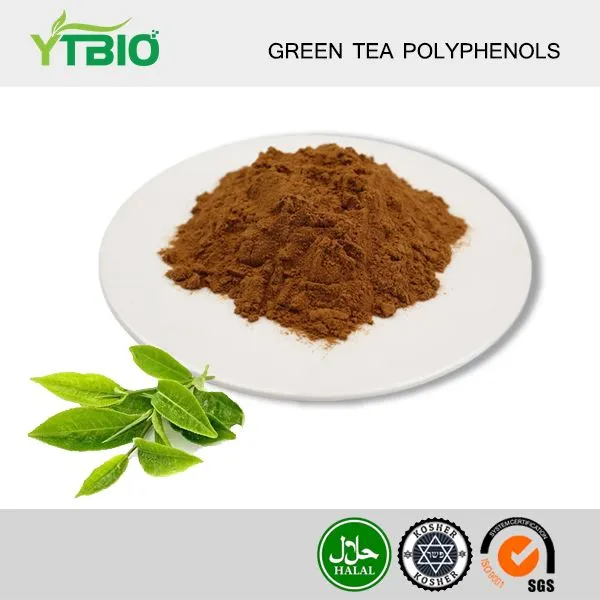
Shaanxi Yuantai Biological Technology Co., Ltd. is one of the most reliable manufacturers and suppliers of tea saponin powder in China. With abundant experience, we warmly welcome you to wholesale bulk tea saponin powder for sale here from our factory. Quality products and reasonable price are available.
Products Description
Tea saponin powder is a natural organic compound extracted from tea leaves. It is mainly composed of saponins in tea leaves and is one of the important active ingredients of tea leaves. The powdered product has multiple uses and a wide range of application fields. The main components of r are saponins, including apeptine, catechin saponins and catechins. Usually obtained by extraction and purification from tea leaves. The extraction process can be carried out using water, ethanol or other solvents, followed by steps of concentration, filtration and drying to obtain a powdery product. It has good surfactant properties, can form rich foam in water, and has good cleaning and foaming effects. It has the effect of regulating cholesterol levels, can help reduce blood cholesterol levels, and is beneficial to cardiovascular health. r Rich in polyphenolic compounds with antioxidant properties that scavenge free radicals and protect cells from oxidative damage.

Product Features
Pure Natural uses 100% pure natural tea leaves as raw materials, without any chemical additives and synthetics. It has a natural source and conforms to the concept of green environmental protection.
Antibacterial and deodorizing: It has certain antibacterial activity, which can inhibit the growth and reproduction of bacteria and mold. It also removes odors, keeping items smelling fresh.
Environmental friendliness: pay attention to environmental protection in the production process, and adopt the principle of sustainable development. It will not pollute the environment and meets the requirements of ecological balance and sustainable development.
Multifunctional application: it has a wide range of application fields. In addition to being used as a cleaning agent, it can also be used in the preparation of skin care products, shampoos, detergents, and other products, and it can also be used in pesticides and plant nutrients in the agricultural field.
Safe and reliable: After a strict production process and quality control, the safety and stability of the product are ensured. It complies with relevant national standards and regulations and is safe and reliable.
Wide market recognition: It is widely recognized and praised in domestic and foreign markets. It is widely used in households, hotel, catering, industry, and other fields, and is loved by consumers.
test report

What Is The Function Of Tea saponin?
Antibacterial effect
It has certain antibacterial activity and can inhibit the growth and reproduction of various bacteria. This makes it a potential application in the preparation of disinfectants, antiseptics and skin care products.
Prevent cardiovascular disease
Rich in polyphenolic compounds that have antioxidant and anti-inflammatory properties. It can reduce the production of free radicals in the body, lower blood cholesterol levels, and prevent diseases of the cardiovascular system, such as high blood pressure and arteriosclerosis.
Liver protection
It has a certain protective effect on the liver. It can reduce the degree of liver damage, promote the repair and regeneration of liver cells, and reduce the occurrence of fat accumulation and liver fibrosis.
Anti-inflammatory effect
It has a certain anti-inflammatory effect, which can reduce inflammation and tissue damage. It can regulate inflammation-related signaling pathways and the release of cytokines, reducing the production of inflammatory mediators.
Regulate immune function
It can regulate the function of the immune system and enhance the immunity of the body. It can increase the activity and number of immune cells and improve the body's ability to fight pathogens and diseases.
Anti-oxidize effect
Rich in polyphenolic compounds with strong antioxidant activity. It neutralizes free radicals in the body, reduces oxidative stress damage to cells and tissues, and delays the aging process.
Using tea saponin as the carbon source, multifunctional carbon quantum dots TS-CDs with AIE properties were synthesized through solvothermal method. Through proton-deprotonation reaction, TS-CDs can be used in pH (0.2-1.8) under extremely acidic conditions. ) and has a good linear relationship (R2=0.9959). Through its AIE properties and solvent effect, stable detection of HSA is achieved. After experimental verification, TS-CDs can stably detect HSA within 48 hours after adding it. At the same time, ionic strength and pH have little impact on the detection of HSA. Finally, TS-CDs were applied to mitochondrial localization and enable cellular imaging of endogenous and exogenous HSA.

Graphic abstract: TS-CDs synthesized using tea saponin as carbon source are used for ratiometric pH detection, HSA detection, cell imaging and mitochondrial localization.
The lattice and size of TS-CDs were studied by TEM and HR-TEM. As shown in Figure 1A, the TEM image of TS-CDs showed a nearly spherical structure and a particle size of 2.5 ± 1 nm. HR-TEM showed a lattice spacing of 0.34 nm, which corresponds to the (002) plane of graphite. Likewise, the XRD spectrum (Figure 1B) shows a broad peak at 23°, corresponding to a spacing value of approximately 0.34 nm. XPS (Fig. 1C) shows that TS-CDs are mainly composed of carbon and oxygen. The surface groups of TS-CDs were characterized by FT-IR, as shown in Figure 1D, which mainly include -OH/-NH2, -CH3, C=C and C-N. TS-CDs possess a large Stokes shift of 153 nm, reaching 213 nm under acidic conditions. In addition, the fluorescence spectra of TS-CDs in acetone and methanol were recorded, as shown in Figures 1F and 1G. The maximum emission peaks are at 313 nm and 533 nm, which have excitation-dependent and excitation-independent characteristics respectively and belong to the carbon core and surface. luminous state. Figure 1H records the fluorescence peaks of TS-CDs in different solvents. As the polarity of the solvent increases, the fluorescence emission wavelength of TS-CDs gradually shifts red, proving the solvent effect of TS-CDs.
In order to study its AIE properties, the fluorescence spectra of TS-CDs in different water contents were recorded (Figure 1I). TS-CDs emit blue fluorescence in good solvents, and as the water content increases from 0% to 60%, 533 nm The yellow-green fluorescence gradually increases. When the water content increased from 60% to 90%, TS-CDs formed large aggregates, resulting in a decrease in fluorescence intensity due to the π-π stacking effect.

Figure 1. Spectral properties of TS-CDs. (A) TEM and HR-TEM images of TS-CDs; (B) XRD image of TS-CDs; (C) XPS image of TS-CDs; (D) Infrared spectrum image of TS-CDs; (E) TS- UV absorption spectrum (purple line), fluorescence excitation spectrum (blue line) and fluorescence emission spectrum (red line) of CDs; (F) Fluorescence spectra of TS-CDs in methanol under different excitation wavelengths; (G) Under different excitation wavelengths , Fluorescence spectrum of TS-CDs in acetone; (H) Fluorescence emission spectra of TS-CDs in different solvents; (I) Fluorescence emission intensity and fluorescence wavelength of TS-CDs with different water contents (0% to 90%) Change trend graph.
Since TS-CDs are highly hydrophobic and have AIE effect and solvent effect, it is speculated that TS-CDs can respond to HSA. Researchers have proven that adding HSA can reduce the polarity of the system. Due to the reduction in solvent polarity, the fluorescence of TS-CDs gradually increases, which is consistent with the optical properties of TS-CDs, that is, the fluorescence intensity increases from 90% to 90% with water content. dropped to 60% and increased. As shown in Figure 2A, as the concentration of HSA increased to 180 μM, the fluorescence intensity of TS-CDs increased 6.5 times, with good linearity in the two detection ranges of 6~70 μM and 80~180 μM (Figure 2B and C). Figure 2E is a graph of selectivity and competition of TS-CDs. Under the same test conditions, selectivity and competition experiments were conducted using amino acids and proteins that may coexist with HSA. The results show that TS-CDs have good selectivity. Moreover, the presence of other ions does not affect the response of TS-CDs to HSA.

Figure 2. Spectrum of TS-CDs in response to HSA. (A) Fluorescence emission spectrum of TS-CDs in response to HSA; (B) Linear relationship between fluorescence emission intensity and HSA concentration (6~70 μM); (C) Linear relationship between fluorescence emission intensity and HSA concentration (70~180 μM) ; (D) Time-driven graph (0-40 min) without HSA (black line) and with HSA (red line); (E) Selectivity and competitive fluorescence intensity graph; (F) Selective and competitive image.
The authors recorded the effect of pH (0.2~1.8) value on the fluorescence emission intensity of TS-CDs. As shown in Figure 3A, as the pH value increases from 0.2 to 1.8, the fluorescence intensity of TS-CDs at 593 nm decreases, and conversely, the fluorescence intensity at 533 nm increases. More importantly, it can be observed from Figure 3B that I533 nm/I593 nm has a good linear relationship (R=0.9959), indicating that TS-CDs can be used to detect pH values under extremely acidic conditions. Figure 3D is a photo of TS-CDs under UV light at different pH. As the pH increases, the orange fluorescence of TS-CDs gradually weakens and the yellow-green fluorescence gradually increases, which is consistent with the changes in the fluorescence curve.
In order to elucidate the response mechanism of TS-CDs to pH value, UV-visible absorption spectroscopy, infrared spectroscopy and zeta potential were used for verification. Figure 3E shows the UV absorption spectra of TS-CDs at pH=1.0 and pH=7.0. The UV absorption at 380 nm decreases slightly with the decrease of pH value, and the absorption peak broadens. This is due to the TS-CDs under acidic conditions. The particle size of CDs becomes smaller, resulting in a broadening of the particle size distribution. Figure 3F is the infrared spectra of TS-CDs at different pH values. As the pH value increases from 1.0 to 7.0, the intensity of N-H and O-H caused by the deprotonation of carbon dots weakens. At the same time, the hydrogen bonds between the hydroxyl groups of TS-CDs are enhanced, and the O-H/N-H absorption peak shifts from 3419 cm-1 to 3437 cm-1. The zeta potential value of TS-CDs is -4.43 mV at pH=7.0, which indicates that the surface of TS-CDs is negatively charged. When the pH value of TS-CDs dropped to 0.5, as the pH value dropped, the surface groups of TS-CDs were protonated, and the zeta potential value reached 2.97 mV. When the pH value of TS-CDs increases from 7.0 to 12.0, the zeta potential of TS-CDs increases sharply, which indicates that -OH/O=C-NH2/-NH2 of TS-CDs is deprotonated and exhausted. In summary, under acidic conditions, nitrogen is protonated due to edge/surface groups and rigid carbon core structure. As the alkalinity increases, the fluorescence at 593 nm decreases as the doped nitrogen is deprotonated. The fluorescence enhancement at 533 nm is due to the deprotonation of edge/surface groups leading to the enhancement of van der Waals forces between carbon dots, which then leads to the aggregation of carbon dots and thus the fluorescence enhancement.

Figure 3. TS-CDs response to pH spectrum. (A) Fluorescence emission spectra of TS-CDs at different pH values; (B) Linear relationship between fluorescence emission intensity of TS-CDs between 533 nm and 593 nm and pH; (C) Different pH values (0.1~13 ), changes in fluorescence emission intensity of TS-CDs; (D) images of TS-CDs under 365 nm UV light at different pH values; (E) TS-CDs at pH=1 (red line) and pH=7 ( (Blue line); (F) FT-IR spectra of TS-CDs at pH=1 (black line) and pH=7.0 (red line).
In order to further expand the application of TS-CDs, the authors explored the application of TS-CDs in cell imaging. They first determined the intracellular localization of TS-CDs and used commercial mitochondrial localization dye (Mito-tracker red) and TS in HepG2 cells. -CDs were used to perform fluorescence colocalization experiments, as shown in Figure 4A. There is a large overlap between the green channel of TS-CDs fluorescence and the red channel of Mito-tracker red (Pearson correlation coefficient is 0.94), and it can be seen through intensity cross-section analysis that the two peaks have good overlap (Figure 4B) . Furthermore, when colocalization experiments were performed with the lipid titration dye BODIPY 493/505 and TS-CDs, the Pearson correlation coefficient was only 0.75 (Figure 4C), which clearly shows that TS-CDs can localize mitochondria.

Figure 4. Mitochondria co-localization map of TS-CDs. (A) (a-c) Confocal images of HepG2 cells after adding TS-CDs and BODIPY 493/503 and incubating for 30 minutes; (d) Colocalization scatter plot of TS-CDs and BODIPY 493/503 after incubating for 30 minutes; (e-g) Confocal images of HepG2 cells incubated with TS-CDs and Mito-tracker red for 30 minutes; (h) Co-localization scatter plot of TS-CDs and Mito-tracker red incubated for 30 minutes; (B) a Fluorescence intensity distribution in selected areas of channel B and b; (C) Fluorescence intensity distribution in selected areas of channel e and f.
For the application of TS-CDs in cell imaging, MTT assay was first performed with HepG2 to examine the cytotoxicity of TS-CDs. Figure 5B shows that TS-CDs have very little cytotoxicity. Figure 5A (a-c) shows that HepG2 cells co-cultured with TS-CDs for 30 minutes showed only weak fluorescence in the green channel. In contrast, bright green fluorescence was observed after incubation with HSA for 24 h and then with TS-CDs for 30 min (Fig. 5A, d–f). g-i is the imaging picture after adding the HSA inhibitor dansyl-L-proline (DP), and its fluorescence intensity is weaker than d-f. Figure 5C shows the average fluorescence intensity of HepG2 cells after culture with TS-CDs, TS-CDs + HSA and TS-CDs + HSA + DP from left to right respectively. These results indicate that TS-CDs can be used for imaging of intracellular HSA.

Figure 5. Imaging pattern of HSA cells detected by TS-CDs. (A) Confocal images of HepG2 cells incubated with TS-CDs for 30 minutes; (a-c) Confocal images of TS-CDs in HepG2 cells incubated for 30 minutes; (d-f) Confocal images of TS-CDs + HSA incubated for 30 minutes. Image; (g-i) Confocal image of TS-CDs + HSA + DP incubated for 30 minutes; (B) Cell survival rate graph after incubation with TS-CDs; (C) Average fluorescence intensity of the fluorescence field in (A).
Simvastatin was used to stimulate HepG2 cells to produce HSA. As shown in Figure 6A (a-c), the fluorescence intensity was significantly enhanced after incubation with simvastatin for 24 hours and then incubation with TS-CDs for 30 minutes. However, the control group with the addition of simvastatin inhibitor DP showed weaker fluorescence Figure 6A (d-f). The above experiments show that TS-CDs can penetrate the cell membrane and have the ability to detect intracellular HSA levels.

Figure 6. HSA profile induced by TS-CDs in response to drugs. (A) Confocal imaging of drug-induced production of HSA; (a-c) Confocal images of simvastatin + TS-CDs in HepG2 cells; (d-f) Confocal images of simvastatin + TS-CDs + DP in HepG2 cells Image; (B) Average fluorescence intensity of the fluorescence field in (A).
What Is The Application Of Tea saponin?
Daily chemical products: They can be used as an ingredient in detergents such as shampoo, shower gel, and hand sanitizer. It has good surfactant properties, produces a rich lather, and effectively cleanses the skin and hair.

Agriculture and Horticulture: It has a wide range of applications in the field of agriculture. It can be used as a biological pesticide for crops, and has the functions of repelling and killing pests. Tea saponin powder can effectively inhibit common pests on crops, such as aphids, mites, and whitefly, etc., and protect plants from pests.
Medicine field: It has certain medicinal value. It has been found to have antibacterial, anti-inflammatory and antioxidant activities, and can be used to prepare oral medicines, external ointments and traditional Chinese medicine compound preparations, etc. In addition, it also has a certain regulatory effect on the cardiovascular and immune systems and has potential value in the prevention and treatment of some diseases.
Chewing gum and oral care products: Because Tea saponin powder has cleaning and antibacterial effects, it is often added to oral care products such as chewing gum, oral rinse, and toothpaste. It can effectively remove bacteria and dirt in the mouth and protect oral health.
Anti-aging and skin care products: Rich in polyphenolic compounds with strong antioxidant activity. Therefore, it is widely used in anti-aging and skin care products. Tea saponin powder can scavenge free radicals, reduce oxidative stress damage to the skin, promote cell health and skin youthfulness.
Detergents and detergents: As a natural surfactant, it can be used to prepare various detergents and detergents, such as washing powder, hand sanitizer, dishwashing liquid, etc. It effectively removes stains and oils, leaving it clean and fresh.
Food additive: It can be used as a food additive with the effect of increasing flavor and taste. It can be used in baked goods, confectionery, beverages and other products to improve taste and flavor.
contact us
Get Latest Bulk Price Quote Now!
Telephone/WhatsApp:+8617782577059
Email:sales@sxytbio.com
Hot Tags: tea saponin powder, China tea saponin powder manufacturers, suppliers, factory