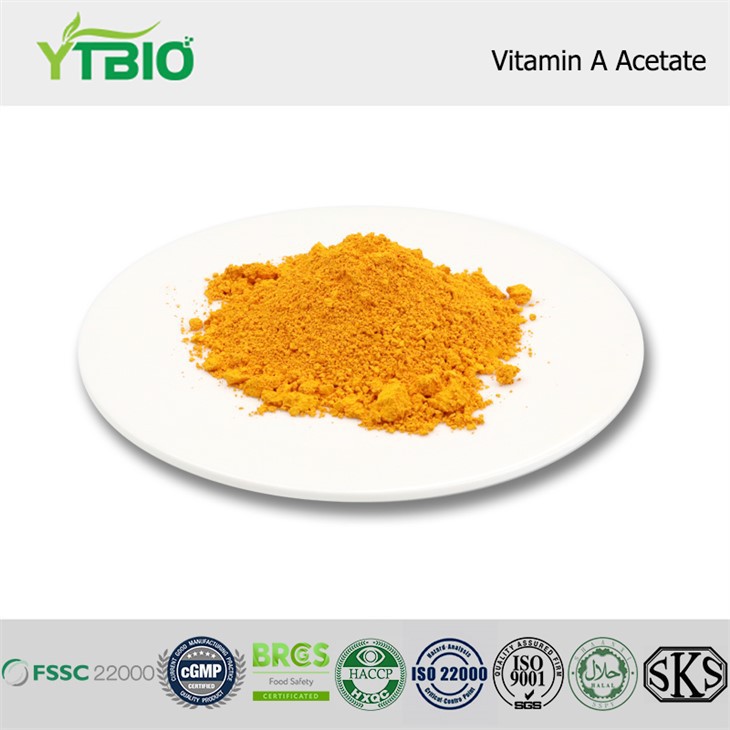
Shaanxi Yuantai Biological Technology Co., Ltd. is one of the most reliable manufacturers and suppliers of vitamin a acetate in China. With abundant experience, we warmly welcome you to wholesale bulk vitamin a acetate for sale here from our factory. Quality products and reasonable price are available.
Products Description
Vitamin A acetate, also known as vitamin A acetate, is a classic fat-soluble vitamin A derivative with significant applications in pharmaceutical nutrition and skincare. Due to its active molecular structure and environmental sensitivity, strict requirements apply to its production, storage, and use.
Basic Physicochemical Indicators
The molecular formula of this product is C₂₂H₃₂O₂, CAS number 127-47-9, molecular weight 328.488; with a density of 1.0±0.1 g/cm³, melting point 57–58℃, boiling point 440.5±14.0℃, and refractive index 1.532; it is almost insoluble in water, with a water solubility of only 0.00001 g/L at 20℃, classifying it as a typical fat-soluble active substance.
Stability and Storage Conditions
Vitamin A acetate is chemically unstable and highly sensitive to light, oxygen, and high temperatures, easily undergoing oxidative degradation and becoming ineffective. For industrial and formulation applications, it requires storage at 2-8°C, protected from light and oxygen. After opening, it is recommended to seal the container with an inert gas atmosphere and use it as soon as possible to ensure activity and efficacy.
Core Physiological and Skin Care Functions
- Nutritional Supplementation and Deficiency Correction: As a stable form of vitamin A, it can be absorbed and utilized by the body to treat and prevent vitamin A deficiency, improving dry skin, keratinization and desquamation, mucosal abnormalities, low immunity, and related vision problems caused by vitamin A deficiency. It is an important raw material in the pharmaceutical and nutritional fields.
- Skin Conditioning and Anti-aging Effects: In cosmetic systems, vitamin A acetate can effectively regulate the growth and differentiation of epithelial cells, promote the normalization of epidermal cell metabolism, and improve abnormal keratin metabolism. Long-term, proper use can restore the smoothness and firmness of rough, aging, and thickened skin, reduce fine lines and wrinkles, and also improve rough skin texture, uneven skin tone, and pigmentation. It is a commonly used active ingredient in high-end anti-wrinkle, whitening, and repairing skin care products.
Product List
| Project | Detailed Information |
|---|---|
| Product Name | Vitamin A Acetate / Retinyl acetate |
| Chemical Identification |
Molecular Formula: C₂₂H₃₂O₂ CAS No.: 127-47-9 Molecular Weight: 328.488 |
| Physicochemical Properties |
Crystalline Density: 1.0±0.1 g/cm³ Melting Point: 57–58℃ Boiling Point: 440.5±14.0℃ Refractive Index: 1.532 Solubility: Almost insoluble in water (solubility 0.00001 g/L at 20℃), lipid-soluble |
| Stability and Storage |
Unstable in nature, easily destroyed by light, heat, and oxygen; Storage conditions: 2-8℃, low temperature, protected from light, sealed and oxygen-free. |
| Core Functions | 1. Pharmaceutical Nutrition: Treatment/prevention of Vitamin A deficiency, improvement of dry skin, keratosis, low immunity, and related vision problems. 2. Cosmetic Applications: Regulates epithelial cell metabolism, promotes skin renewal, improves roughness, fine lines, and dullness, achieving anti-wrinkle, skin-rejuvenating, and brightening effects. |
| Processing and Usage Requirements | It is recommended to add it during the oil phase stage; dissolution temperature should be controlled at around 60℃; it must be used in conjunction with an antioxidant (such as BHT). |
| Usage Restrictions | For cosmetic industrial production use only. Do not use directly as a medicine or for direct application at home. |
What are the benefits?
1. Maintaining Vision Health
Vitamin A acetate is converted into retinol in the body, which constitutes photosensitive substances in the retina (such as rhodopsin), helping with dark adaptation and night vision. Deficiency can lead to night blindness or dry eye. Furthermore, it protects the integrity of the cornea and conjunctiva.
2. Promoting Skin and Mucous Membrane Health
- Repairing the Skin Barrier:By regulating epidermal cell differentiation and proliferation, it improves dry and rough skin, often used in skincare products or oral supplements as an adjunct treatment for acne and psoriasis.
- Anti-aging Effects:Stimulates collagen production, reduces skin damage caused by ultraviolet radiation, and delays wrinkle formation.
- Mucous Membrane Protection:Maintains the integrity of mucous membranes in the respiratory and digestive tracts, reducing the risk of pathogen invasion.
3. Enhancing Immune Function
Vitamin A participates in the differentiation and functional regulation of immune cells (such as T cells and B cells), enhancing the defensive capabilities of the mucous membrane immune barrier. Studies show that deficiency may increase the risk of respiratory infections, diarrhea, and other diseases; appropriate supplementation can help shorten the course of illness.
4. Supporting Growth, Development, and Reproductive Health
- Embryonic Development: Adequate intake during pregnancy is crucial for fetal vision, heart, and bone development; however, recommended dosages must be strictly followed, as excessive intake may cause birth defects.
- Reproductive Function: Maintains the normal function of reproductive organs such as the testes and ovaries, and is related to sperm production and estrogen metabolism.
Products applications
Food Industry
- Nutritional Fortification Agents
Retinyl acetate is added to edible oils, dairy products, grains, and other foods to prevent vitamin A deficiency. Its stability is superior to natural vitamin A, making it suitable for high-temperature processing and extending shelf life.
- Special Population Foods
Infant formula and prenatal supplements often contain retinyl acetate to meet the high vitamin A requirements of specific populations, supporting visual development and immune function.
Pharmaceutical Field
- Treatment of Vitamin A Deficiency
As a pharmaceutical ingredient, it is used to improve night blindness, dry eye, and abnormal skin keratinization. Oral or injectable preparations can directly replenish the body's vitamin A reserves.
- Topical Skin Preparations
Some ointments or gels contain low concentrations of retinyl acetate to help repair UV damage or mild skin inflammation, but should be used as directed by a physician to avoid irritation.
Skin Care and Cosmetics
- Antioxidant and Anti-aging
Retinyl acetate is converted to retinoic acid in skin care products, stimulating collagen production and reducing fine lines and pigmentation.
- Commonly used in anti-aging serums, face creams, etc.
Improved gentleness: Compared to direct application of retinol, it is less irritating and suitable for sensitive skin or long-term maintenance. It should be used with a stable formula to prevent photodegradation.

→CONTACT US
For more product information and pricing details about Vitamin A acetate, please feel free to contact the YTBIO team.
tel/ Whatsapp:86 177 8257 7059
email:sales@sxytbio.com
Hot Tags: vitamin a acetate, China vitamin a acetate manufacturers, suppliers, factory